
 CATEGORIES
- ORGANIC COMPOUNDS(1240)
- INORGANIC COMPOUNDS(1103)
- LAB EQUIPMENT(5176)
- *(1)
- Organic Synthesis(438)
- Alkylating agents(11)
- Bases(47)
- Building blocks(43)
- Catalysts(5)
- Classic Acids(85)
- Drying Agents(54)
- Enantioselective synthesis(2)
- Halogenating reagents(8)
- Oxidizing agents(27)
- Peptide synthesis(4)
- Reducing Agents(19)
- Solvents(160)
- Industry(783)
Language
US version allows shipping to all available destinations


 MANUFACTURER
Building blocks in organic synthesis are small or medium-sized compounds used as structural modules for the construction of more complex molecules. They may contain one or more functional groups that enable further transformations, formation of new bonds and introduction of defined chemical fragments into a target compound. This group includes organic halides, boronic acids, amines, alcohols, aldehydes, ketones, carboxylic acids, esters, heterocyclic compounds, alkynes, alkenes and bifunctional reagents used in modular synthesis.
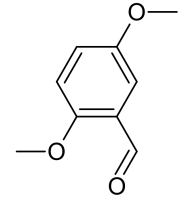 2,5-dimethoxybenzaldehyde, Pure >99%
129,25 Kč
Net price: 105,07 Kč
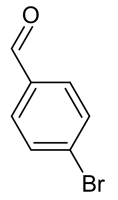 4-Bromobenzaldehyde
884,43 Kč
Net price: 719,04 Kč
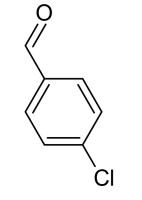 4-Chlorobenzaldehyde
530,66 Kč
Net price: 431,43 Kč
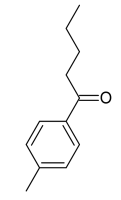 4-METHYLVALEROPHENONE
12 382,08 Kč
Net price: 10 066,75 Kč
 5-HTP ( 5-Hydroxytryptophan ) - Pure Compound - Powder
82,25 Kč
Net price: 66,86 Kč
 Acetanilide ( N-phenylacetamide )
3 191,63 Kč
Net price: 2 594,81 Kč
 Cinnamon Aldehyde Zimmaldehyde Cinnamaldehyde Fragrance Pure Compound - 1000ml
1 880,19 Kč
Net price: 1 528,60 Kč
 Cinnamon Aldehyde Zimmaldehyde Cinnamaldehyde Fragrance Pure Compound - 100ml
470,05 Kč
Net price: 382,13 Kč
 Cinnamon Aldehyde Zimmaldehyde Cinnamaldehyde Fragrance Pure Compound - 10ml
93,99 Kč
Net price: 76,42 Kč
 Cinnamon Aldehyde Zimmaldehyde Cinnamaldehyde Fragrance Pure Compound - 500ml
1 175,12 Kč
Net price: 955,37 Kč
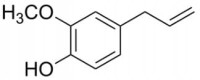 Eugenol (P-Allilguaiacol) Pure >99%
388,56 Kč
Net price: 315,92 Kč
 Helional Pure Compound Ocean Propanal - 100ml
705,07 Kč
Net price: 573,23 Kč
 Helional Pure Compound Ocean Propanal - 10ml
117,51 Kč
Net price: 95,52 Kč
 Helional Pure Compound Ocean Propanal - 1L
4 339,62 Kč
Net price: 3 528,13 Kč
 Helional Pure Compound Ocean Propanal - 500ml
3 290,33 Kč
Net price: 2 675,06 Kč
 Hexaphenone >99% - 1000ml
9 400,94 Kč
Net price: 7 643,04 Kč
 Hexaphenone >99% - 100ml
1 175,12 Kč
Net price: 955,37 Kč
 Hexaphenone >99% - 20 000ml
108 490,57 Kč
Net price: 88 203,71 Kč
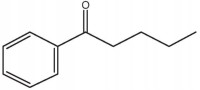 Hexaphenone >99% - 5000ml
37 971,70 Kč
Net price: 30 871,29 Kč
 Hexaphenone >99% - 500ml
5 405,54 Kč
Net price: 4 394,75 Kč
 Indole ( 2,3-benzopyrol ) Pure >99% - 100g
2 350,24 Kč
Net price: 1 910,79 Kč
 Indole ( 2,3-benzopyrol ) Pure >99% - 50g
1 410,14 Kč
Net price: 1 146,46 Kč
 Phenidone (1-phenyl-3-pyrazolidinone) photographic developer - 1000g
5 170,52 Kč
Net price: 4 203,66 Kč
 Phenidone (1-phenyl-3-pyrazolidinone) photographic developer - 100g
705,07 Kč
Net price: 573,23 Kč
 Phenidone (1-phenyl-3-pyrazolidinone) photographic developer 500g - 500g
2 937,79 Kč
Net price: 2 388,44 Kč
Building blocks as modules for molecule construction
Building blocks are used when a complex molecule can be planned as a combination of simpler fragments. In practice, this means selecting starting compounds or intermediates that already contain the desired carbon skeleton fragment, heteroatom, aromatic ring, heterocyclic system or reactive functional group. This allows synthesis to be designed in a more modular way, instead of constructing the entire molecule from the simplest raw materials.
What role do building blocks play in retrosynthesis?
In retrosynthetic planning, a target compound is analyzed through possible bond disconnections that lead to simpler fragments available by synthesis or purchase. Building blocks act as practical equivalents of such fragments, because they connect retrosynthetic planning with real laboratory synthesis. Their selection affects route length, the number of protection and deprotection steps, selectivity and the availability of starting materials.
Monofunctional and multifunctional building blocks
The simplest building blocks contain one dominant functional group that determines their use in a reaction. More advanced compounds may be bifunctional or multifunctional, allowing them to act as linkers, scaffold-expanding fragments or reagents for sequential bond-forming steps. Such compounds are particularly useful in modular synthesis because a single building block can introduce a defined structural fragment while leaving a site for further functionalization.
Which building blocks are commonly used in organic synthesis?
Commonly used building blocks include compounds containing reactive groups suitable for substitution, coupling, condensation, addition and cyclization reactions. Important examples include aryl and alkyl halides, boronic acids and their esters, amines, phenols, alcohols, aldehydes, ketones, carboxylic acids, esters, amides, alkynes, alkenes and heterocycles containing nitrogen, oxygen or sulfur. The choice of a specific fragment depends on the bond to be formed and the structural element to be introduced into the molecule.
Why are heterocyclic building blocks important?
Heterocyclic building blocks are especially important because rings containing nitrogen, oxygen or sulfur often give molecules defined electronic, geometric and polar properties. In organic synthesis, such fragments can be introduced as preformed ring systems or generated during cyclization reactions. Heterocycles are frequently used as structural cores, binding fragments and elements that modify solubility, reactivity and intermolecular interactions.
Building blocks and compound library synthesis
Building blocks are central to the synthesis of compound libraries because they allow systematic combination of different structural fragments. Changing one building block can lead to a series of analogs with a similar core but different substituents, physicochemical properties and research-relevant activity profiles. This approach is particularly important in diversity-oriented synthesis, where the goal is to obtain sets of molecules with varied scaffolds and functionalities.
What are bifunctional building blocks?
Bifunctional building blocks contain two reactive centers or two groups enabling further transformations. They may act as linkers between two molecular fragments, reagents for sequential reactions or elements that rapidly increase product complexity. Their synthetic value comes from the fact that one compound can participate in more than one bond-forming step, which supports the design of shorter and more modular synthetic routes.
How should a building block be selected for a planned synthesis?
The choice of building block depends on the expected reaction type, functional-group compatibility, compound stability, availability, purity and the possibility of further transforming the intermediate product. It is also important whether the fragment helps avoid unnecessary protecting-group steps, enables selective bond formation and avoids problematic by-products. In practice, a good building block should combine suitable reactivity with predictable behavior under synthetic conditions.
Use in laboratory research
Building blocks are used in organic synthesis, medicinal chemistry, materials chemistry, heterocyclic synthesis, preparation of structural analogs and studies of relationships between molecular structure and properties. They may serve as starting substrates, intermediates, linkers, precursors for compound libraries or reference materials in the development of new synthetic methods.
Safety and limitations of use
Building blocks do not represent a single hazard class because their properties depend on the specific chemical structure. Some may be volatile, flammable, corrosive, toxic, moisture-sensitive, reactive toward oxidizing agents or capable of forming hazardous by-products. Each compound from this group should be evaluated individually according to its structure, hazard classification and safety data sheet.
Product use
The product is intended exclusively for laboratory, analytical, technical and research use, especially in organic synthesis and synthetic route design. It is not intended for consumption, contact with the body, pharmaceutical use, food applications, cosmetic use or any similar consumer use.