
 CATEGORIES
- ORGANIC COMPOUNDS(1129)
- Thiols(1)
- Metal-organic compounds(1)
- Sulfonic acids(6)
- Alcohols(74)
- Aldehydes(47)
- Alkyl nitrites(6)
- Amines(55)
- Aminoacids(59)
- Amides(33)
- Anhydrides(11)
- Acyl Halides(5)
- Carboxylic Acids(170)
- Dyes and Indicators(99)
- Esters(52)
- Ethers(17)
- Organic Halogens (Organohalides)(30)
- Flavonoids(5)
- Heterocycles(24)
- Hydrocarbons(34)
- Imides(2)
- Ketones(29)
- Mixed solvents(16)
- Nitro Compounds(5)
- Nitriles(9)
- Organic salts(74)
- Phenols(30)
- Polymers ( HMW compounds )(68)
- Sugars (Saccharides)(24)
- Silicoorgano and Phosphoorganocompounds(1)
- Peptides(2)
- Terpenes(16)
- Others(126)
- INORGANIC COMPOUNDS(1055)
- LAB EQUIPMENT(5176)
- *(1)
- Organic Synthesis(417)
- Industry(775)
Language
US version allows shipping to all available destinations


 MANUFACTURER
Aromatic hydrocarbons are compounds composed only of carbon and hydrogen atoms that contain one or more aromatic rings. This group includes simple arenes such as benzene, toluene, ethylbenzene and xylenes, as well as polycyclic aromatic hydrocarbons such as naphthalene, anthracene and phenanthrene. In organic synthesis, they are important substrates for aromatic substitution, ring functionalization, coupling reactions, studies of π-electron systems and preparation of more complex benzenoid compounds.
 Toluene, methylbenzene p.a. grade
8,00 zł
Net price: 6,50 zł
 Alpha- Methylstyrene - (Prop-1-en-2-yl)benzene - 2-Phenylpropene - AMS >99% - 1000ml
139,51 zł
Net price: 113,42 zł
 Alpha- Methylstyrene - (Prop-1-en-2-yl)benzene - 2-Phenylpropene - AMS >99% - 100ml
39,86 zł
Net price: 32,41 zł
 Alpha- Methylstyrene - (Prop-1-en-2-yl)benzene - 2-Phenylpropene - AMS >99% - 20 000ml = 4x5L
1 674,11 zł
Net price: 1 361,07 zł
 Alpha- Methylstyrene - (Prop-1-en-2-yl)benzene - 2-Phenylpropene - AMS >99% - 5000ml
577,97 zł
Net price: 469,89 zł
 Alpha- Methylstyrene - (Prop-1-en-2-yl)benzene - 2-Phenylpropene - AMS >99% - 500ml
79,72 zł
Net price: 64,81 zł
 Benzene
120,00 zł
Net price: 97,56 zł
 Chryzene
1 200,00 zł
Net price: 975,61 zł
 Crystaline Naphtalene ( naphthalin , naphthaline , antimite ) - 1000g = 1kg
298,95 zł
Net price: 243,05 zł
 Crystaline Naphtalene ( naphthalin , naphthaline , antimite ) - 100g
55,81 zł
Net price: 45,37 zł
 Crystaline Naphtalene ( naphthalin , naphthaline , antimite ) - 10g
8,00 zł
Net price: 6,50 zł
 Crystaline Naphtalene ( naphthalin , naphthaline , antimite ) - 500g
159,44 zł
Net price: 129,63 zł
 Ethylbenzene Phenylethane
29,86 zł
Net price: 24,28 zł
 Monomeric Styrene ( Liquid ) - 1000ml
139,51 zł
Net price: 113,42 zł
 Monomeric Styrene ( Liquid ) - 100ml
29,89 zł
Net price: 24,30 zł
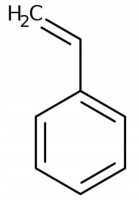 Monomeric Styrene ( Liquid ) - 10ml
11,96 zł
Net price: 9,72 zł
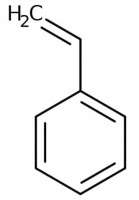 Monomeric Styrene ( Liquid ) - 5000ml
657,69 zł
Net price: 534,71 zł
 Monomeric Styrene ( Liquid ) - 500ml
79,72 zł
Net price: 64,81 zł
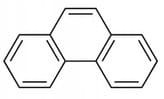 Phenantrene
143,10 zł
Net price: 116,34 zł
 Pure Anthracene
769,95 zł
Net price: 625,98 zł
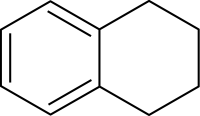 Tetralin (1,2,3,4-Tetrahydronaphthalene)
25,00 zł
Net price: 20,33 zł
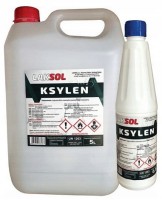 Xylene mixture of isomers Solvent 1L
31,89 zł
Net price: 25,93 zł
Arenes as basic aromatic hydrocarbons
Arenes contain an aromatic ring that forms a stabilized π-electron system. Benzene is the simplest example, while its alkyl derivatives such as toluene, ethylbenzene and xylene isomers are often used as models of benzenoid compound reactivity. Substituents influence physicochemical properties, the direction of further substitution and compatibility with reaction conditions.
Polycyclic aromatic hydrocarbons
Polycyclic aromatic hydrocarbons contain at least two fused aromatic rings. As the number of rings increases, molecular weight, volatility, water solubility, lipophilicity and tendency to adsorb on surfaces change. Such compounds are important not only in organic synthesis, but also in materials chemistry, environmental analysis and studies of conjugated π systems.
Why do arenes often react by substitution?
Aromatic hydrocarbons tend to preserve the stabilized π system. For this reason, many arene reactions replace a hydrogen atom with another substituent rather than proceeding through simple addition that would destroy aromaticity. This feature underlies many aromatic ring functionalization reactions, including halogenation, nitration, sulfonation, Friedel-Crafts acylation and Friedel-Crafts alkylation.
How do arenes differ from alkenes?
Arenes should not be described as ordinary cyclic alkenes. Despite the presence of π electrons, their reactivity is different because the aromatic system is stabilized by electron delocalization. Alkenes readily participate in addition to the C=C bond, while arenes more often require electrophile activation, a catalyst or suitable conditions that preserve the aromatic ring after substitution.
Importance in coupling and functionalization reactions
Halogenated aromatic hydrocarbons are especially important as substrates for transition-metal-catalyzed coupling reactions. The presence of a C-X bond in the aromatic ring enables formation of new C-C, C-N, C-O or C-S bonds. This allows simple arenes to be transformed into more extended systems used in heterocycle synthesis, organic materials and compound libraries.
Which properties affect their use?
The use of aromatic hydrocarbons depends on ring number, substituent type, volatility, boiling point, solubility, stability and lipophilicity. Simpler arenes may serve as substrates or solvents, while larger polycyclic systems are more often studied as compounds with extended electron delocalization and specific physicochemical properties.
Safety and limitations of use
Aromatic hydrocarbons differ in hazard profile. Some are volatile and flammable, and some present serious toxicological hazards. Benzene requires particular control because of its carcinogenicity, while polycyclic aromatic hydrocarbons may show environmental persistence and lipophilicity. Each compound should be evaluated individually using its safety data sheet and intended application.