
 CATEGORIES
- ORGANIC COMPOUNDS(1134)
- Thiols(1)
- Metal-organic compounds(1)
- Sulfonic acids(6)
- Alcohols(74)
- Aldehydes(47)
- Alkyl nitrites(6)
- Amines(56)
- Aminoacids(59)
- Amides(33)
- Anhydrides(11)
- Acyl Halides(5)
- Carboxylic Acids(170)
- Dyes and Indicators(99)
- Esters(52)
- Ethers(17)
- Organic Halogens (Organohalides)(30)
- Flavonoids(5)
- Heterocycles(25)
- Hydrocarbons(38)
- Imides(2)
- Ketones(29)
- Mixed solvents(16)
- Nitro Compounds(5)
- Nitriles(9)
- Organic salts(74)
- Phenols(30)
- Polymers ( HMW compounds )(68)
- Sugars (Saccharides)(24)
- Silicoorgano and Phosphoorganocompounds(1)
- Peptides(2)
- Terpenes(16)
- Others(125)
- INORGANIC COMPOUNDS(1055)
- LAB EQUIPMENT(5176)
- *(1)
- Organic Synthesis(421)
- Industry(775)
Language
US version allows shipping to all available destinations


 MANUFACTURER
Nitrogen heterocycles are ring compounds containing at least one nitrogen atom as part of the ring. They include saturated systems such as pyrrolidine, piperidine and morpholine, as well as aromatic or partially unsaturated systems such as pyridine, pyrrole, imidazole, pyrazole, indole, quinoline, pyrimidine and triazoles. In organic synthesis, they are important structural cores, ligands, bases, nucleophiles, substrates for functionalization and building blocks for more complex compounds.
 1-Ethyltheobromine Spectroscopically Pure
Lei37.79
Net price: Lei30.72
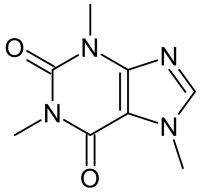 Caffeine Powder Anhydrous >99,9%
Lei22.09
Net price: Lei17.97
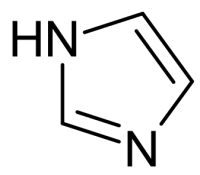 Imidazole
Lei52.33
Net price: Lei42.55
 N-Methylpyrrolidone N-Methyl-2-pyrrolidone NMP Solvent - 1000ml
Lei185.40
Net price: Lei150.73
 N-Methylpyrrolidone N-Methyl-2-pyrrolidone NMP Solvent - 100ml
Lei41.71
Net price: Lei33.91
 N-Methylpyrrolidone N-Methyl-2-pyrrolidone NMP Solvent - 5000ml
Lei880.62
Net price: Lei715.95
 N-Methylpyrrolidone N-Methyl-2-pyrrolidone NMP Solvent - 500ml
Lei134.42
Net price: Lei109.28
 Quinine Powder Pure
Lei25.58
Net price: Lei20.80
 Saccharin
Lei34.88
Net price: Lei28.36
Which types of nitrogen heterocycles are distinguished in chemistry?
Nitrogen heterocycles can be divided according to the number of nitrogen atoms, ring size, degree of saturation and electronic character of the nitrogen atom. Five-membered rings include pyrrole, imidazole, pyrazole and triazoles, while six-membered systems include pyridine, pyrimidine, pyrazine and pyridazine. Fused systems such as indole, quinoline, isoquinoline and purines combine several rings within one structure.
Pyridine-type and pyrrole-type nitrogen
In nitrogen heterocycles, the type of nitrogen atom is especially important. Pyridine-type nitrogen has a lone pair that is not part of the aromatic electron sextet, which affects basicity and coordination ability. Pyrrole-type nitrogen contributes its lone pair to the aromatic system and therefore behaves differently from a typical amine. This difference influences ring reactivity, protonation site, salt formation and functionalization pathways.
Why are nitrogen heterocycles often used as building blocks?
A nitrogen atom can modify polarity, basicity, hydrogen-bonding ability and coordination with metals. This makes nitrogen heterocycles useful fragments in the synthesis of ligands, heteroaromatic compounds, organic materials and compound libraries. A preformed nitrogen ring can then be modified by substitution, coupling, alkylation, acylation, oxidation, reduction or C-H functionalization.
Nitrogen heterocycles in catalytic and coupling reactions
Halogenated and metalated nitrogen heterocycle derivatives can participate in transition-metal-catalyzed coupling reactions. These compounds are often more demanding than simple arenes because the nitrogen atom can coordinate to the metal, change catalyst activity, influence mixture basicity or promote side reactions. Selection of catalyst, ligand, base and solvent is therefore important for selective functionalization of nitrogen-containing rings.
How are nitrogen heterocycles formed?
Nitrogen heterocycles can be prepared by cyclizations involving amines, amides, hydrazines, azides, imines, nitriles, carbonyl compounds and alkynes. Multicomponent reactions, cycloadditions, condensations, reactions of 1,3-dicarbonyl compounds, aminoazole transformations, functionalization of preformed rings and metal-catalyzed reactions are all important. The choice of method depends on ring type, number of nitrogen atoms and desired substitution pattern.
Basicity and nucleophilicity of nitrogen heterocycles
Not all nitrogen heterocycles are basic to the same extent. Pyridines and related azines may behave as bases and ligands, whereas pyrroles are much less basic because the nitrogen lone pair stabilizes the aromatic ring system. Imidazoles and triazoles may show more complex behavior because they contain different types of nitrogen atoms. In synthesis, this matters for salt formation, alkylation, acylation and reaction-condition selection.
Use in laboratory research
Nitrogen heterocycles are used in organic synthesis, coordination chemistry, catalysis, materials chemistry, ligand design, heteroaromatic synthesis and studies of reactivity in ring systems containing nitrogen. They may serve as substrates, intermediates, organic bases, ligands, building blocks, reactivity models or reference materials.
Safety and limitations of use
Nitrogen heterocycles differ in properties depending on structure. Some may be volatile, basic, irritating, toxic, flammable, prone to oxidation or capable of forming salts with acids. Nitrogen-rich systems may have different thermal and chemical stability from simple amines or arenes. Each product should be assessed individually according to its safety data sheet and intended use.