
 CATEGORIES
- ORGANIC COMPOUNDS(1134)
- Thiols(1)
- Metal-organic compounds(1)
- Sulfonic acids(6)
- Alcohols(74)
- Aldehydes(47)
- Alkyl nitrites(6)
- Amines(56)
- Aminoacids(59)
- Amides(33)
- Anhydrides(11)
- Acyl Halides(5)
- Carboxylic Acids(170)
- Dyes and Indicators(99)
- Esters(52)
- Ethers(17)
- Organic Halogens (Organohalides)(30)
- Flavonoids(5)
- Heterocycles(25)
- Hydrocarbons(38)
- Imides(2)
- Ketones(29)
- Mixed solvents(16)
- Nitro Compounds(5)
- Nitriles(9)
- Organic salts(74)
- Phenols(30)
- Polymers ( HMW compounds )(68)
- Sugars (Saccharides)(24)
- Silicoorgano and Phosphoorganocompounds(1)
- Peptides(2)
- Terpenes(16)
- Others(125)
- INORGANIC COMPOUNDS(1055)
- LAB EQUIPMENT(5176)
- *(1)
- Organic Synthesis(421)
- Industry(775)
Language
US version allows shipping to all available destinations


 MANUFACTURER
Nitroalkanes are aliphatic organic compounds containing a nitro group bonded to an sp³ carbon (R–NO₂). The strongly electron-withdrawing –NO₂ group makes them polar and gives their α-hydrogens unusually high acidity.
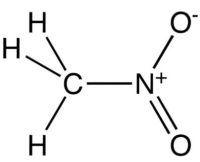 Nitromethane
70,00 zł
Net price: 56,91 zł
Nitroalkanes feature the nitro functional group best represented by resonance forms R–N⁺(=O)–O⁻, producing a highly polarized substituent with strong −I and −M effects. This polarization increases the stability of adjacent carbanions and is responsible for the distinctive α-acidic character of nitroalkanes: deprotonation yields a resonance-stabilized nitronate (or aci-nitro) anion. Typical pKₐ values are ~9–11 for simple nitroalkanes, far lower than alkanes and comparable to many carbonyl-adjacent systems, enabling them to act as carbon-nucleophile equivalents in synthesis.
Preparation. Nitroalkanes are commonly formed by nucleophilic substitution of primary alkyl halides with nitrite/cyanate-like reagents favoring C-attack, or by radical nitration of alkanes under controlled conditions. They can also arise via oxidation of amines or related nitrogen-containing precursors in specialized routes. Product distributions depend on substrate structure and reaction regime (ionic vs radical).
Reactivity.
-
Nitroaldol (Henry) reaction: nitronate anions add to aldehydes/ketones to give β-nitro alcohols, which may dehydrate to nitroalkenes.
-
Michael addition: nitronates add 1,4- to activated alkenes, furnishing γ-nitro carbonyl frameworks after further steps.
-
Nef reaction: conversion of nitronate salts to carbonyl compounds (aldehydes/ketones) under oxidative or acidic conditions, so the nitro group can function as a masked carbonyl.
-
Reduction: nitroalkanes reduce to amines through nitroso/hydroxylamine intermediates; chemoselectivity is tunable with catalyst and conditions.
-
α-Functionalization: because nitronates are ambident nucleophiles, α-substitution (e.g., alkylation) is feasible, followed by downstream transformations.
Spectroscopic signatures and properties. Nitroalkanes show two intense IR N–O stretches (asymmetric ~1520–1560 cm⁻¹; symmetric ~1340–1380 cm⁻¹). The nitro group deshields neighboring nuclei in NMR, and their sizable dipole moments raise boiling points relative to comparable hydrocarbons.
Overall, nitroalkanes are electronically activated aliphatic building blocks whose α-acidity and redox versatility make them key intermediates for constructing C–C and C–N bonds and for accessing carbonyl and amine products.