
 CATEGORIES
- ORGANIC COMPOUNDS(1240)
- INORGANIC COMPOUNDS(1103)
- LAB EQUIPMENT(5176)
- *(1)
- Organic Synthesis(438)
- Alkylating agents(11)
- Bases(47)
- Building blocks(43)
- Catalysts(5)
- Classic Acids(85)
- Drying Agents(54)
- Enantioselective synthesis(2)
- Halogenating reagents(8)
- Oxidizing agents(27)
- Peptide synthesis(4)
- Reducing Agents(19)
- Solvents(160)
- Industry(783)
Language
US version allows shipping to all available destinations


 MANUFACTURER
Drying agents are substances used to remove water or reduce moisture in laboratory systems, samples, solvents, organic extracts, gases and closed storage spaces. This group includes anhydrous inorganic salts such as magnesium sulfate, sodium sulfate, calcium sulfate and calcium chloride, as well as adsorptive materials such as molecular sieves and silica gel. Their selection depends on the medium to be dried, required residual water content, chemical compatibility and the mechanism of moisture binding.
 Calcium Chloride Anhydrous Drying Agent - 1000g
34,00 zł
Net price: 27,64 zł
 Calcium Chloride Anhydrous Drying Agent - 100g
11,96 zł
Net price: 9,72 zł
 Calcium Chloride Anhydrous Drying Agent - 25 000g
400,00 zł
Net price: 325,20 zł
 Calcium Chloride Anhydrous Drying Agent - 5000g
100,00 zł
Net price: 81,30 zł
 Calcium Chloride Anhydrous Drying Agent - 500g
25,91 zł
Net price: 21,07 zł
 Magnesium Sulfate Anhydrous ( Drying Agent ) MgSO4 - 100g
15,94 zł
Net price: 12,96 zł
 Magnesium Sulfate Anhydrous ( Drying Agent ) MgSO4 - 25 000g
290,00 zł
Net price: 235,77 zł
 Magnesium Sulfate Anhydrous ( Drying Agent ) MgSO4 - 5000g
90,00 zł
Net price: 73,17 zł
 Magnesium Sulfate Anhydrous ( Drying Agent ) MgSO4 - 500g
35,87 zł
Net price: 29,16 zł
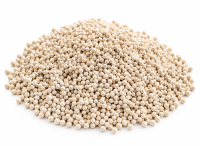 Molecular Sieves 3A 1-3mm
79,72 zł
Net price: 64,81 zł
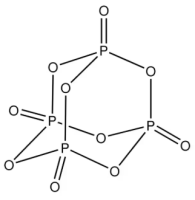 Phosphorus Pentoxide
22,00 zł
Net price: 17,89 zł
 Potassium Carbonate ( K2CO3 ) Anhydrous - Drying Agent - - 1000g
35,87 zł
Net price: 29,16 zł
 Potassium Carbonate ( K2CO3 ) Anhydrous - Drying Agent - - 100g
11,96 zł
Net price: 9,72 zł
 Potassium Carbonate ( K2CO3 ) Anhydrous - Drying Agent - - 25 000g
500,00 zł
Net price: 406,50 zł
 Potassium Carbonate ( K2CO3 ) Anhydrous - Drying Agent - - 5000g
159,44 zł
Net price: 129,63 zł
 Potassium Carbonate ( K2CO3 ) Anhydrous - Drying Agent - - 500g
19,93 zł
Net price: 16,20 zł
 Potassium Hydroxide ( KOH ) caustic potash - 1000g
55,81 zł
Net price: 45,37 zł
 Potassium Hydroxide ( KOH ) caustic potash - 100g
11,96 zł
Net price: 9,72 zł
 Potassium Hydroxide ( KOH ) caustic potash - 25 000g = 25kg Bag
570,00 zł
Net price: 463,41 zł
 Potassium Hydroxide ( KOH ) caustic potash - 5000g
150,00 zł
Net price: 121,95 zł
 Potassium Hydroxide ( KOH ) caustic potash - 500g
35,87 zł
Net price: 29,16 zł
 Silica Gel Drying Agent Colorless Sio2 99,6% - 1000g
43,85 zł
Net price: 35,65 zł
 Silica Gel Drying Agent Colorless Sio2 99,6% - 100g
11,96 zł
Net price: 9,72 zł
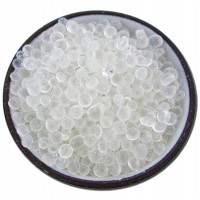 Silica Gel Drying Agent Colorless Sio2 99,6% - 25 000g = 25kg bag
976,57 zł
Net price: 793,96 zł
 Silica Gel Drying Agent Colorless Sio2 99,6% - 5000g
199,30 zł
Net price: 162,03 zł
Drying agents in work with organic solvents
Drying agents are particularly important in organic synthesis and sample preparation because even small amounts of water may affect reaction progress, yield, reagent stability or analytical results. In laboratory practice, they are used after liquid-liquid extraction, during preparation of dry solvents, for storage of hygroscopic substances and in systems where water changes the reaction equilibrium.
How do anhydrous drying salts work?
Anhydrous inorganic salts remove water mainly by forming hydrates. When they contact a wet solvent or extract, water molecules are bound in the solid phase, reducing their amount in the organic phase. The efficiency of this process depends on the type of salt, amount of water, contact time, particle size, mixing and solvent, so different drying agents should not be treated as equivalent.
How do magnesium sulfate and sodium sulfate differ?
Magnesium sulfate and sodium sulfate are classical drying salts, but their efficiency may differ significantly. Magnesium sulfate is often useful when rapid and intensive water removal from an organic extract is required. Sodium sulfate is sometimes used as a milder drying agent, but in some systems it may remove water less efficiently. In practice, the choice between them depends on sample type, solvent and the next laboratory step.
Molecular sieves as adsorptive drying agents
Molecular sieves are porous aluminosilicate materials with an ordered pore structure. After thermal activation, they can adsorb water molecules inside their channels and cavities. Their action is not simply moisture uptake, but selective adsorption of small molecules depending on pore size. For this reason, 3A, 4A, 5A and 13X molecular sieves differ in application range and in the types of molecules that can be retained within the material structure.
When are molecular sieves used?
Molecular sieves are useful when very low water content is required in a solvent or gas. They may be used for drying solvents before moisture-sensitive reactions, maintaining dry storage conditions and working with systems where simple hydrate-forming salts do not provide sufficient water removal. Their efficiency depends on activation, sieve type, contact time and matching of pore size to the medium being dried.
Silica gel and humidity control
Silica gel acts as a porous water adsorbent and is commonly used to reduce humidity in closed spaces, desiccators, protective packaging and storage systems. Water molecules are retained on the surface and within the pores of the material. Adsorption capacity depends on relative humidity, temperature, pore structure, saturation level and previous regeneration of the material.
Does a drying agent remove all water?
A drying agent reduces water content, but it does not always produce a completely anhydrous system. The final moisture level depends on the equilibrium between water present in the medium and the ability of the drying agent to bind or adsorb it. The amount of drying agent, its activation state, contact time, temperature, mixing and whether water is present as trace moisture, as a mixture component or as part of a strongly interacting solvent system are also important.
How should a drying agent be selected?
The choice of drying agent should consider the type of medium, required dryness, chemical compatibility and further use of the sample. One material may be suitable for rapid drying of an organic extract after phase separation, another for keeping a solvent dry over a longer time, and another for humidity control in a closed container. It is also important whether the drying agent may introduce dust, adsorb part of the analyte or make filtration more difficult.
Use in laboratory work
Drying agents are used in organic synthesis, sample preparation for chromatography and spectroscopy, purification of extracts, storage of hygroscopic substances, work with moisture-sensitive solvents and desiccators. They may serve as auxiliary materials in a single sample-preparation step or in long-term maintenance of dry conditions.
Safety and limitations of use
Drying agents do not represent one hazard class because their properties depend on the specific substance. Some are dust-forming, hygroscopic, irritating, reactive toward certain groups of compounds or may release heat upon contact with water. Each material should be selected and used according to its properties, safety data sheet and the requirements of the specific laboratory system.
Product use
The product is intended exclusively for laboratory, analytical, technical and research use, especially for drying samples, solvents, extracts, gases and storage spaces. It is not intended for consumption, contact with the body, pharmaceutical use, food applications, cosmetic use or any similar consumer use.