
 PRODUKTY
- ORGANICZNE(1103)
- NIEORGANICZNE(932)
- SPRZĘT LABORATORYJNY(5155)
- *(1)
- Synteza organiczna(373)
- Przemysł(741)
Wersje językowe
Wersja US umożliwia dostawę do wszystkich dostępnych destynacji.


 Producenci
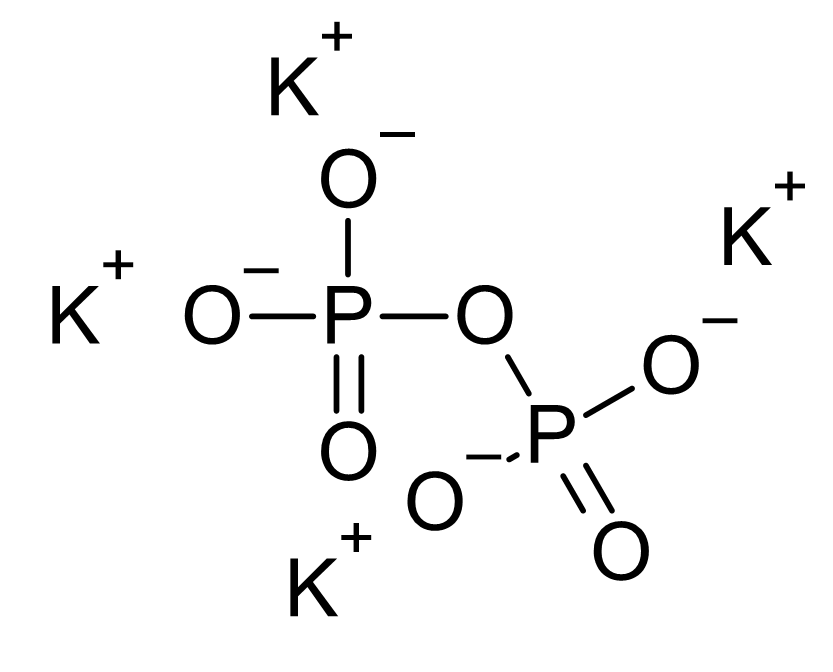
Pirofosforan tetrapotasu (TKPP) 99,9%
Cena regularna:
Cena regularna:
towar niedostępny
dodaj do przechowalni
0
 99,9% "Pin It")
Opis
Tetrapotassium Pyrophosphate (TKPP) 99.9%
Other Names: TKPP, Diphosphoric acid, tetrapotassium salt; Potassium pyrophosphate; Potassium diphosphate
Note: Although designated as E450(V) for food use, this description is for technical and industrial applications only.
CAS Number: 7320-34-5
Sum Formula: K₄P₂O₇
Molar Mass: 330.34 g/mol
Appearance: White crystalline powder or granules
Tetrapotassium pyrophosphate (TKPP) is an inorganic salt of pyrophosphoric acid. It is highly soluble in water and functions as a chelating agent, dispersant, and buffer. It is used in technical processes involving surface treatment, water conditioning, detergents, and ceramics.
Chemical and Physical Properties
-
Density: ~2.53 g/cm³
-
Melting Point: ~1,100°C (decomposes)
-
pH (1% solution): 10.2–10.7
-
Solubility in Water: Highly soluble (~187 g/L at 25°C)
-
Solubility in Other Solvents: Insoluble in alcohols and organic solvents
-
Hygroscopicity: Slightly hygroscopic
Applications
-
Water Treatment: Acts as a scale inhibitor and sequestering agent for hardness ions
-
Detergent Formulations: Disperses dirt and stabilizes alkalinity in cleaning products
-
Surface Treatment: Used in electroplating, metal cleaning, and industrial degreasing
-
Ceramics and Pigments: Functions as a dispersing agent in clay and mineral slurries
-
Industrial Cleaners: Enhances performance of alkaline cleaning systems
Safety

Signal Word: Warning
P264+P265, P280, P305+P351+P338, and P337+P317
First Aid Measures
-
Eye Contact: Rinse immediately with plenty of water for at least 15 minutes. Seek medical attention if irritation develops
-
Skin Contact: Wash skin with soap and water. Remove contaminated clothing
-
Inhalation: Move to fresh air. If symptoms persist, seek medical help
-
Ingestion: Rinse mouth with water. Do not induce vomiting. Seek medical advice if unwell
Handling and Storage
-
Storage Conditions: Store in a dry, cool, and well-ventilated place in tightly sealed containers. Protect from moisture
-
Handling Precautions: Avoid contact with eyes and skin. Use suitable PPE and prevent dust formation