
 PRODUKTY
- ORGANICZNE(1280)
- Związki metaloorganiczne(1)
- Tiole(1)
- Alkohole(83)
- Aldehydy(61)
- Azotyny Alkilowe(6)
- Aminy(85)
- Aminokwasy(59)
- Amidy(34)
- Bezwodniki(11)
- Halogenki Kwasowe(5)
- Kwasy karboksylowe(188)
- Barwniki, wskaźniki(103)
- Estry(55)
- Etery(20)
- Halogenki(35)
- Flawonoidy(5)
- Heterocykle(42)
- Węglowodory(42)
- Imidy(1)
- Ketony(32)
- Rozpuszczalniki (premix)(16)
- Związki Nitrowe(15)
- Nitroalkany(3)
- Nitrobenzeny(4)
- Nitrostyreny(8)
- Nitryle(11)
- Sole organiczne(73)
- Fenole(37)
- Polimery(67)
- Cukry(24)
- Związki krzemoorganiczne oraz fosforoorganiczne(1)
- Peptydy(2)
- Terpeny(19)
- Inne(142)
- NIEORGANICZNE(1086)
- SPRZĘT LABORATORYJNY(5158)
- *(1)
- Synteza organiczna(485)
- Przemysł(788)
Wersje językowe
Wersja US umożliwia dostawę do wszystkich dostępnych destynacji.


 Producenci
P2NP Fenylo-2-nitropropen Fenylonitropropen

Cena regularna:
Cena regularna:
towar niedostępny
dodaj do przechowalni
4.10527


Opis
Phenyl-2-nitropropene
Other Names:
-
(2-Nitroprop-1-en-1-yl)benzene
-
β-Nitrostyrene, α-methyl derivative
-
P2NP
CAS Number: 18315-84-9
Sum Formula: C₉H₉NO₂
Molar Mass: 163.17 g/mol
Appearance: Yellow crystalline solid or powder
Phenyl-2-nitropropene is an aromatic nitroalkene characterized by a nitropropene side chain conjugated to a phenyl ring. It is commonly used in organic synthesis as an intermediate in the preparation of phenyl-substituted amines and in research involving electrophilic and nucleophilic addition to nitroalkenes.
Chemical and Physical Properties
Density: ~1.14 g/cm³ (estimated)
Melting Point: 62–65°C
Boiling Point: Decomposes before boiling
Solubility in Water: Practically insoluble
Solubility in Other Solvents: Soluble in ethanol, acetone, dichloromethane, and other polar organic solvents
Odor: Mild aromatic or sweetish odor
Applications
Organic Synthesis: Intermediate for the production of phenyl-substituted amines and related derivatives.
Chemical Research: Utilized in studies involving conjugate addition (Michael reactions), cycloadditions, and hydrogenation of nitroalkenes.
Nitroalkene Chemistry: Model compound for testing nucleophilic reactivity and reaction kinetics.
Safety

Signal Word: Warning
H302 (97.5%): Harmful if swallowed [Warning Acute toxicity, oral]
H315 (97.5%): Causes skin irritation [Warning Skin corrosion/irritation]
H319 (97.5%): Causes serious eye irritation [Warning Serious eye damage/eye irritation]
H335 (97.5%): May cause respiratory irritation [Warning Specific target organ toxicity, single exposure; Respiratory tract irritation]
P261, P264, P264+P265, P270, P271, P280, P301+P317, P302+P352, P304+P340, P305+P351+P338, P319, P321, P330, P332+P317, P337+P317, P362+P364, P403+P233, P405, and P501
Handling and Storage
Storage Conditions: Store in a tightly closed container in a cool, dry, and well-ventilated area. Keep away from light, heat, and oxidizing agents.
Handling Precautions: Avoid formation of dust and exposure to air or moisture. Use personal protective equipment and standard lab safety protocols.
Bezpieczeństwo
Koszty dostawy
Cena nie zawiera ewentualnych kosztów płatności
Produkty powiązane
1-(2-FLUOROFENYLO)-2-NITROPROPEN
Cena netto: 6,18 €
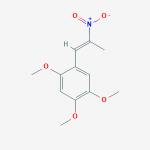
1-(2,4,5-TRIMETOKSYFENYLO)-2-NITROPROPEN
Cena netto: 6,18 €
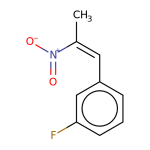
1-(3-FLUOROFENYLO)-2-NITROPROPEN
Cena netto: 6,18 €
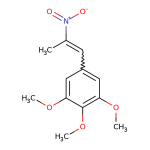
1-(3,4,5-TRIMETOKSYFENYLO)-2-NITROPROPEN
Cena netto: 6,18 €
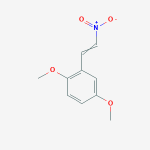
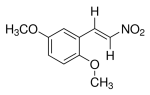
2,5-DIMETOKSY-BETA-NITROSTYREN
Cena netto: 6,18 €
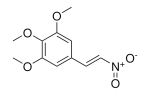
3,4,5-trimetoksy-beta-nitrostyren 1-(3,4,5-Trimetoksyfenylo)-2-nitroeten : 3,4,5-TriMeOP2NE : 3,4,5-Trimethoxynitrostyren
Cena netto: 6,18 €
4-Fluoro-P2NP | 4F-P2NP | 1-(4-fluorofenylo)-2-nitropropen )
Cena netto: 6,18 €