
 PRODUKTY
- ORGANICZNE(1103)
- NIEORGANICZNE(932)
- Kwasy mineralne(39)
- Chelaty(2)
- Pierwiastki(120)
- Sole(543)
- Tlenki(120)
- Wodorotlenki(29)
- Wodorki(14)
- Inne(16)
- Nanocząstki(1)
- Roztwory mianowane(47)
- SPRZĘT LABORATORYJNY(5155)
- *(1)
- Synteza organiczna(373)
- Przemysł(741)
Wersje językowe
Wersja US umożliwia dostawę do wszystkich dostępnych destynacji.


 Producenci
Kwas bromowodorowy
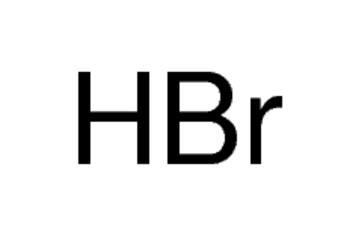
Cena regularna:
Cena regularna:
towar niedostępny
dodaj do przechowalni
0


Opis
Hydrobromic Acid
Other Names: Bromane, Hydronium bromide, Bromhydric acid, Aqueous hydrogen bromide
CAS Number: 10035-10-6
Sum Formula: HBr (aq)
Molar Mass: 80.91 g/mol
Appearance: Colorless to faint yellow liquid (depending on concentration and purity)
Hydrobromic acid is an aqueous solution of hydrogen bromide (HBr), a strong and highly corrosive acid. It is one of the strongest mineral acids and is widely used in both laboratory and industrial settings. It reacts vigorously with bases and many metals, releasing hydrogen gas and forming bromide salts.
Chemical and Physical Properties
Density (48% solution): ~1.49 g/cm³
Melting Point: –11°C (48% solution)
Boiling Point: ~124°C (48% solution)
Solubility in Water: Completely miscible
Solubility in Other Solvents: Soluble in alcohol and ether
Odor: Sharp, pungent, acrid odor
Applications
Organic Synthesis: Used to prepare alkyl bromides, especially via substitution reactions.
Inorganic Chemistry: Employed in the production of bromide salts and catalysts.
Etching and Cleaning: Utilized in semiconductor processing and metal cleaning.
Laboratory Reagent: Acts as a strong acid in various analytical and preparative procedures.
Safety


Signal Word: Danger
H280 (32.9%): Contains gas under pressure; may explode if heated [Warning Gases under pressure]
H314 (99.8%): Causes severe skin burns and eye damage [Danger Skin corrosion/irritation]
H318 (40%): Causes serious eye damage [Danger Serious eye damage/eye irritation]
H331 (17.8%): Toxic if inhaled [Danger Acute toxicity, inhalation]
H335 (99.3%): May cause respiratory irritation [Warning Specific target organ toxicity, single exposure; Respiratory tract irritation]
P260, P261, P264, P264+P265, P271, P280, P301+P330+P331, P302+P361+P354, P304+P340, P305+P354+P338, P316, P317, P319, P321, P363, P403+P233, P405, P410+P403, and P501
Handling and Storage
Storage Conditions: Store in a tightly closed, corrosion-resistant container in a cool, dry, well-ventilated area. Keep away from incompatible materials such as strong oxidizers and bases.
Handling Precautions: Use only under a chemical fume hood. Avoid contact with skin, eyes, and clothing. Handle with full PPE including acid-resistant gloves and eye/face protection.