
 PRODUKTY
- ORGANICZNE(1280)
- Związki metaloorganiczne(1)
- Tiole(1)
- Alkohole(83)
- Aldehydy(61)
- Azotyny Alkilowe(6)
- Aminy(85)
- Aminokwasy(59)
- Amidy(34)
- Bezwodniki(11)
- Halogenki Kwasowe(5)
- Kwasy karboksylowe(188)
- Barwniki, wskaźniki(103)
- Estry(55)
- Etery(20)
- Halogenki(35)
- Flawonoidy(5)
- Heterocykle(42)
- Węglowodory(42)
- Imidy(1)
- Ketony(32)
- Rozpuszczalniki (premix)(16)
- Związki Nitrowe(15)
- Nitryle(11)
- Sole organiczne(73)
- Fenole(37)
- Polimery(67)
- Cukry(24)
- Związki krzemoorganiczne oraz fosforoorganiczne(1)
- Peptydy(2)
- Terpeny(19)
- Inne(142)
- NIEORGANICZNE(1086)
- SPRZĘT LABORATORYJNY(5158)
- *(1)
- Synteza organiczna(485)
- Przemysł(788)
Wersje językowe
Wersja US umożliwia dostawę do wszystkich dostępnych destynacji.


 Producenci
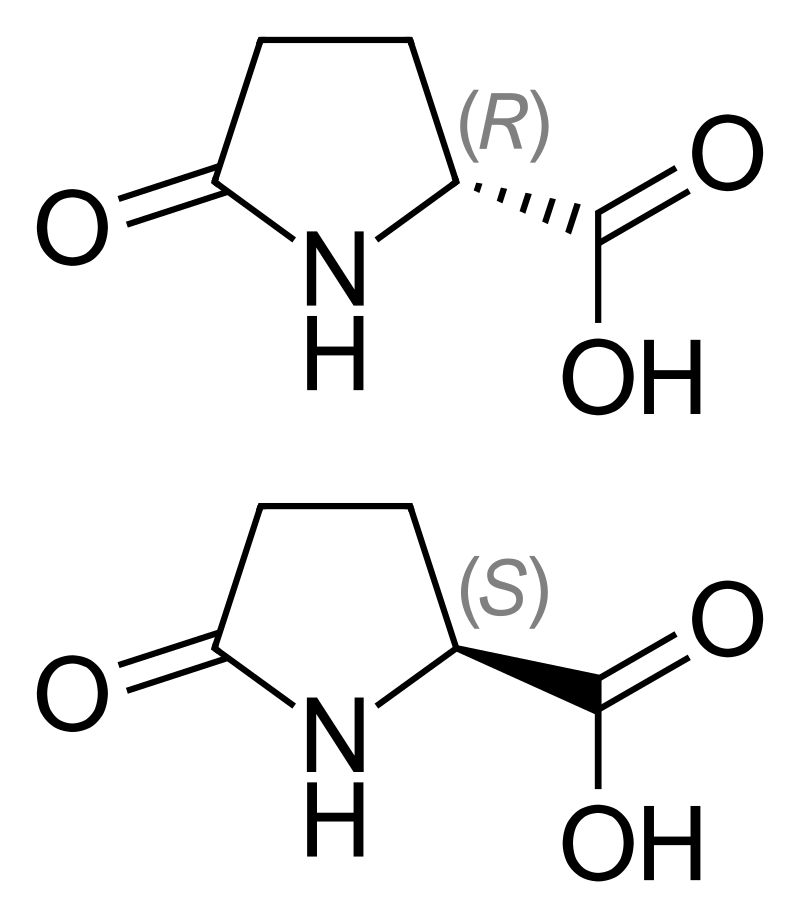
Kwas L-piroglutaminowy w proszku
Cena regularna:
Cena regularna:
towar niedostępny
dodaj do przechowalni
0


Opis
L-Pyroglutamic Acid
Other Names: Pyroglutamic acid, Pidolic acid, 5-Oxo-L-proline, (S)-5-Oxopyrrolidine-2-carboxylic acid
CAS Number: 98-79-3
Sum Formula: C₅H₇NO₃
Molar Mass: 129.11 g/mol
Appearance: White to off-white crystalline powder
L-Pyroglutamic acid is a naturally occurring lactam derivative of the amino acid L-glutamic acid. It contains a five-membered ring formed by internal cyclization of the amino acid’s terminal groups. The compound is studied for its chemical stability and role in various cyclic amino acid transformations.
Chemical and Physical Properties
Density: ~1.44 g/cm³ (estimated)
Melting Point: 150–152°C (with decomposition)
Boiling Point: Decomposes before boiling
Solubility in Water: Soluble (≈50 g/L at 20°C)
Solubility in Other Solvents: Soluble in ethanol, slightly soluble in ether
Odor: Odorless
Applications
Organic Synthesis: Used as an intermediate in the preparation of heterocyclic and peptidomimetic compounds.
Peptide Chemistry: Serves as a building block in the synthesis of cyclic peptides and lactams.
Materials Chemistry: Studied in biodegradable polymer formulations and smart material design.
Analytical Chemistry: Employed in the study of amino acid metabolism and structure–activity relationships.
Safety

Signal Word: Warning
H315 (21.9%): Causes skin irritation [Warning Skin corrosion/irritation]
H318 (78.1%): Causes serious eye damage [Danger Serious eye damage/eye irritation]
H319 (20.4%): Causes serious eye irritation [Warning Serious eye damage/eye irritation]
H335 (21.6%): May cause respiratory irritation [Warning Specific target organ toxicity, single exposure; Respiratory tract irritation]
P261, P264, P264+P265, P271, P280, P302+P352, P304+P340, P305+P351+P338, P305+P354+P338, P317, P319, P321, P332+P317, P337+P317, P362+P364, P403+P233, P405, and P501
Handling and Storage
Storage Conditions: Store in a tightly closed container in a dry, cool, and well-ventilated place. Protect from moisture and strong oxidizing agents.
Handling Precautions: Avoid dust formation and exposure to eyes and skin. Use standard laboratory PPE and procedures.