
 PRODUKTY
- ORGANICZNE(1103)
- NIEORGANICZNE(932)
- Kwasy mineralne(39)
- Chelaty(2)
- Pierwiastki(120)
- Sole(543)
- Tlenki(120)
- Wodorotlenki(29)
- Wodorki(14)
- Inne(16)
- Nanocząstki(1)
- Roztwory mianowane(47)
- SPRZĘT LABORATORYJNY(5155)
- *(1)
- Synteza organiczna(373)
- Przemysł(741)
Wersje językowe
Wersja US umożliwia dostawę do wszystkich dostępnych destynacji.


 Producenci
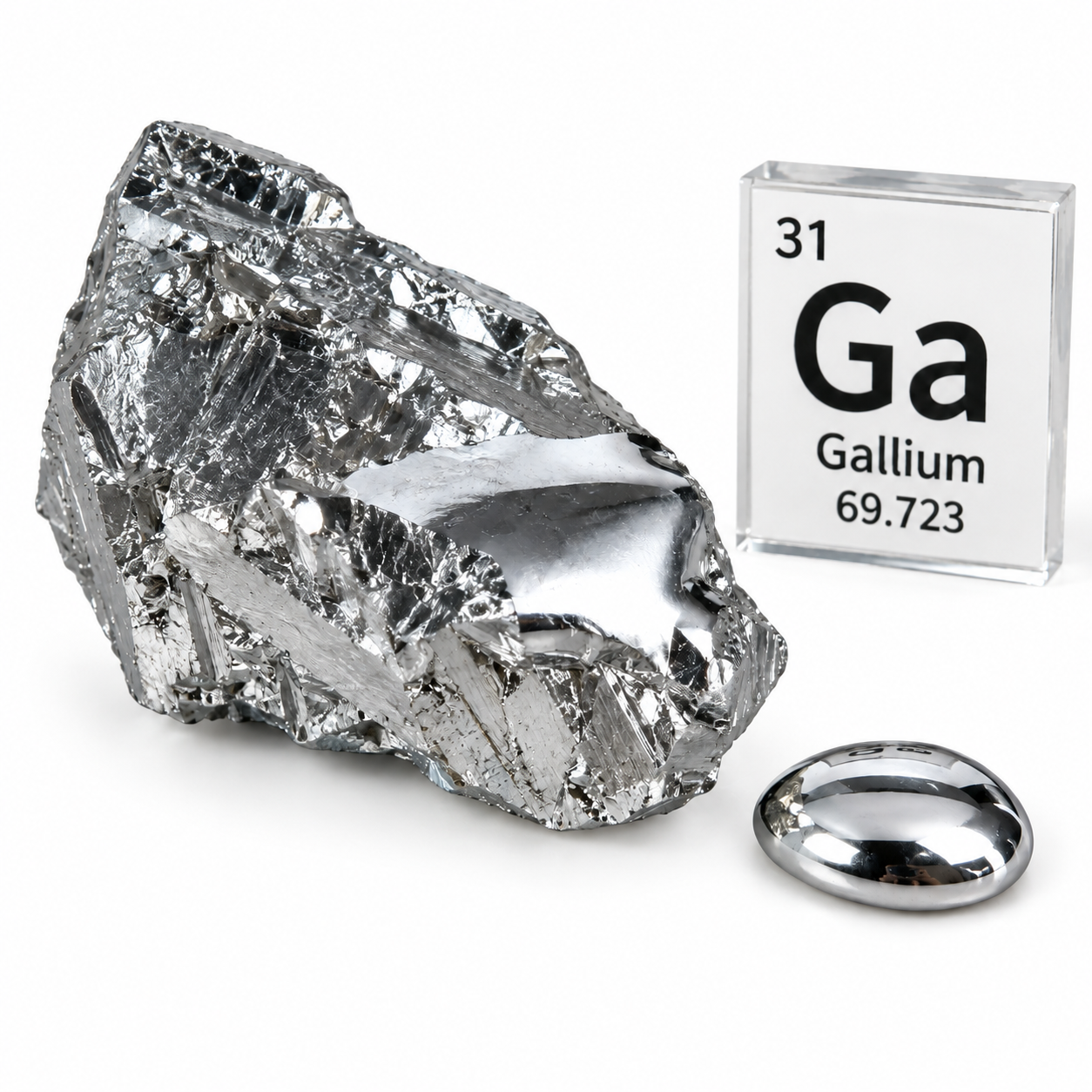
Gal metaliczny (99,99%)
Cena regularna:
Cena regularna:
towar niedostępny
dodaj do przechowalni
0
 "Pin It")
Opis
Gallium Metal (99.99%)
Other Names: Elemental Gallium, Metallic Gallium
CAS Number: 7440-55-3
Sum Formula: Ga
Molar Mass: 69.72 g/mol
Appearance: Silvery-white, soft metal; solid at room temperature, melts slightly above
Gallium is a post-transition metal with unique physical properties. At room temperature, it is solid but melts just above human body temperature. High-purity gallium (99.99%) is used in electronics, semiconductors, and material science applications due to its low melting point and non-toxic nature.
Chemical and Physical Properties
Density: 5.91 g/cm³ (at 25°C)
Melting Point: 29.76°C
Boiling Point: 2,204°C
Solubility in Water: Insoluble
Solubility in Other Solvents: Insoluble in most organic solvents; reacts with acids and alkalis
Odor: Odorless
Electrical Conductivity: Moderate (lower than most metals)
Applications
Electronics: Used in semiconductor devices, such as gallium arsenide (GaAs) and gallium nitride (GaN) for integrated circuits, LEDs, and solar cells.
Alloying Agent: Mixed with other metals to lower their melting points (eutectic alloys).
Material Science: Employed in heat transfer applications and as a component in low-melting alloys for research and industrial purposes.
Measurement Devices: Utilized in temperature sensors and high-temperature thermometers.
Safety

Signal Word: Warning
H290 (32.5%): May be corrosive to metals [Warning Corrosive to Metals]
H302 (25.3%): Harmful if swallowed [Warning Acute toxicity, oral]
H314 (57.2%): Causes severe skin burns and eye damage [Danger Skin corrosion/irritation]
H412 (25.3%): Harmful to aquatic life with long lasting effects [Hazardous to the aquatic environment, long-term hazard]
P234, P260, P264, P270, P273, P280, P301+P317, P301+P330+P331, P302+P361+P354, P304+P340, P305+P354+P338, P316, P321, P330, P363, P390, P405, P406, and P501
First Aid Measures
Eye Contact: Rinse with plenty of water for several minutes. Seek medical attention if irritation develops.
Skin Contact: Wash thoroughly with soap and water. Seek medical attention if irritation occurs.
Inhalation: Move to fresh air. If breathing difficulties occur, get medical attention.
Ingestion: Rinse mouth with water. Do not induce vomiting. Seek medical attention if symptoms occur.
Handling and Storage
Storage Conditions: Store in tightly sealed containers in a dry, cool, and well-ventilated place. Protect from moisture and strong oxidizers.
Handling Precautions: Avoid generation of dust and direct contact with skin and eyes. Use appropriate protective equipment and ensure adequate ventilation.