
 PRODUKTY
- ORGANICZNE(1330)
- NIEORGANICZNE(1007)
- SPRZĘT LABORATORYJNY(5312)
- *(1)
- Synteza organiczna(535)
- Przemysł(835)
Wersje językowe
Wersja US umożliwia dostawę do wszystkich dostępnych destynacji.


 Producenci
Dichromian sodu
Cena regularna:
Cena regularna:
towar niedostępny
dodaj do przechowalni
0


Opis
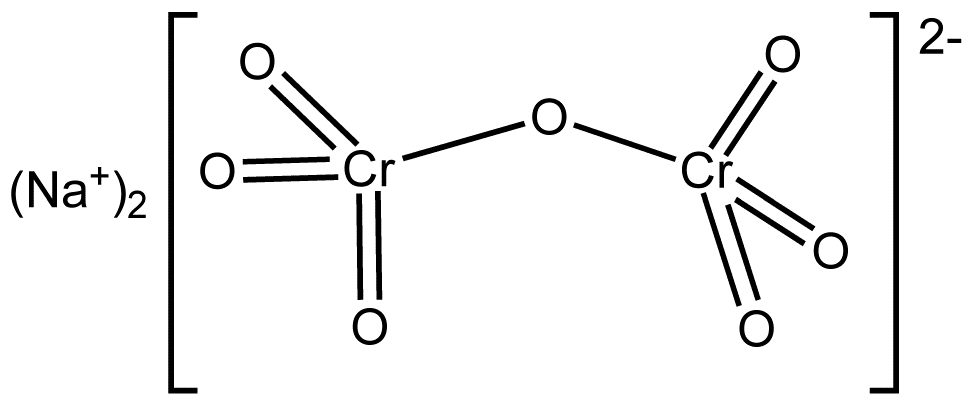
Sodium Dichromate
Other Names: Chromic acid disodium salt, Sodium bichromate, Bichromate of soda
CAS Number: 10588-01-9
Sum Formula: Na₂Cr₂O₇
Molar Mass: 261.97 g/mol
Appearance: Orange to red crystalline solid
Sodium dichromate is a highly water-soluble, inorganic oxidizing agent containing chromium in the hexavalent state (Cr⁶⁺). It is commonly used in industrial and laboratory applications requiring strong oxidation, particularly in the synthesis of organic and inorganic chemicals, corrosion inhibition, and metal finishing.
Chemical and Physical Properties
Density: 2.52 g/cm³
Melting Point: 356.7°C (decomposes)
Boiling Point: Not applicable (decomposes)
Solubility in Water: Highly soluble (73 g/100 mL at 20°C)
Solubility in Other Solvents: Slightly soluble in alcohol
Odor: Odorless
Applications
Oxidizing Agent: Used in organic synthesis for oxidation of alcohols and aldehydes.
Corrosion Inhibitor: Applied in metal surface treatments and passivation.
Pigments and Dyes: Precursor for various chromium-based pigments.
Tanning Industry: Employed in leather processing (now largely replaced due to toxicity).
Laboratory Reagent: Used in analytical chemistry and qualitative testing.
Safety


Signal Word: Danger
H272 (98.5%): May intensify fire; oxidizer [Danger Oxidizing liquids; Oxidizing solids]
H301 (> 99.9%): Toxic if swallowed [Danger Acute toxicity, oral]
H312 (98.5%): Harmful in contact with skin [Warning Acute toxicity, dermal]
H314 (> 99.9%): Causes severe skin burns and eye damage [Danger Skin corrosion/irritation]
H317 (> 99.9%): May cause an allergic skin reaction [Warning Sensitization, Skin]
H330 (> 99.9%): Fatal if inhaled [Danger Acute toxicity, inhalation]
H334 (> 99.9%): May cause allergy or asthma symptoms or breathing difficulties if inhaled [Danger Sensitization, respiratory]
H340 (> 99.9%): May cause genetic defects [Danger Germ cell mutagenicity]
H350 (99.1%): May cause cancer [Danger Carcinogenicity]
H360 (94%): May damage fertility or the unborn child [Danger Reproductive toxicity]
H372 (98.5%): Causes damage to organs through prolonged or repeated exposure [Danger Specific target organ toxicity, repeated exposure]
H400 (> 99.9%): Very toxic to aquatic life [Warning Hazardous to the aquatic environment, acute hazard]
H410 (> 99.9%): Very toxic to aquatic life with long lasting effects [Warning Hazardous to the aquatic environment, long-term hazard]
P203, P210, P220, P233, P260, P261, P264, P270, P271, P272, P273, P280, P284, P301+P316, P301+P330+P331, P302+P352, P302+P361+P354, P304+P340, P305+P354+P338, P316, P317, P318, P319, P320, P321, P330, P333+P317, P342+P316, P362+P364, P363, P370+P378, P391, P403, P403+P233, P405, and P501
Handling and Storage
Storage Conditions: Store in a tightly sealed container in a cool, dry, well-ventilated area away from combustible materials, reducing agents, and acids.
Handling Precautions: Handle with extreme caution due to carcinogenicity and oxidizing nature. Use full PPE and operate in a chemical fume hood or controlled environment.