
 PRODUKTY
- ORGANICZNE(1030)
- Tiole(1)
- Związki metaloorganiczne(1)
- Kwasy sulfonowe(6)
- Alkohole(74)
- Aldehydy(37)
- Azotyny Alkilowe(6)
- Aminy(45)
- Aminokwasy(52)
- Amidy(29)
- Bezwodniki(12)
- Halogenki Kwasowe(5)
- Kwasy karboksylowe(157)
- Barwniki, wskaźniki(92)
- Estry(41)
- Etery(18)
- Halogenki(27)
- Flawonoidy(5)
- Heterocykle(21)
- Węglowodory(31)
- Imidy(2)
- Ketony(25)
- Rozpuszczalniki (premix)(13)
- Związki Nitrowe(7)
- Nitryle(9)
- Sole organiczne(73)
- Fenole(30)
- Polimery(56)
- Cukry(18)
- Związki krzemoorganiczne oraz fosforoorganiczne(1)
- Peptydy(2)
- Terpeny(12)
- Inne(124)
- NIEORGANICZNE(894)
- SPRZĘT LABORATORYJNY(5151)
- *(1)
- Synteza organiczna(354)
- Przemysł(708)
Wersje językowe
Wersja US umożliwia dostawę do wszystkich dostępnych destynacji.


 Producenci
Alkohol Cetylostearylowy (Alkohol Cetearylowy) 30/70
Cena regularna:
Cena regularna:
towar niedostępny
dodaj do przechowalni
0

 30/70 "Pin It")
Opis
Cetostearyl Alcohol 30/70
Other Names: Cetearyl Alcohol 30/70, Cetyl Stearyl Alcohol 30/70, C16–C18 Fatty Alcohol, Cetyl/Stearyl Alcohol, Cetearyl Alcohol, Hexadecan-1-ol and Octadecan-1-ol Mixture
Chemical Formula: C16H34O (Cetyl Alcohol), C18H38O (Stearyl Alcohol)
Molar Mass: 242.44 g/mol (Cetyl Alcohol), 270.49 g/mol (Stearyl Alcohol)
CAS Number: 67762-27-0
Alternative CAS Number: 8005-44-5
Component CAS Numbers: 36653-82-4 (Cetyl Alcohol), 112-92-5 (Stearyl Alcohol)
Composition: Approximately 30% Cetyl Alcohol (C16) and 70% Stearyl Alcohol (C18) by weight
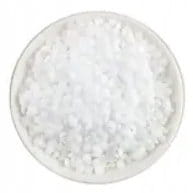
Appearance: White to off-white waxy solid, typically supplied as flakes, pellets or granules
Odor: Mild, characteristic fatty or waxy odor
SMILES (Cetyl Alcohol): CCCCCCCCCCCCCCCCO
SMILES (Stearyl Alcohol): CCCCCCCCCCCCCCCCCCO
Cetostearyl Alcohol 30/70, also known as Cetearyl Alcohol 30/70, is a mixture of two long-chain saturated primary fatty alcohols: approximately 30% cetyl alcohol (hexadecan-1-ol, C16) and 70% stearyl alcohol (octadecan-1-ol, C18) by weight. Both components contain a terminal hydroxyl group attached to a linear hydrocarbon chain, giving the mixture a combination of hydrophobic and weakly hydrophilic molecular characteristics. Unlike short-chain alcohols, cetostearyl alcohol is a solid, waxy material at room temperature and exhibits very low volatility and limited water solubility. Its molecular structure allows it to interact with surfactants and other amphiphilic compounds, forming organized structures that influence the consistency, stability and rheological behavior of complex formulations. Cetostearyl Alcohol 30/70 is widely investigated in colloid chemistry, pharmaceutical technology, materials science and cosmetic formulation research. In particular, it is an important component of lamellar gel networks, which are structured systems consisting of fatty alcohols, surfactants and water. Scientific studies have demonstrated that the combination of cetyl and stearyl alcohol can provide improved physical stability compared with formulations containing either component individually. The 30/70 composition is especially relevant because the relative proportions of the two fatty alcohols influence crystallization, molecular packing, phase transitions and the mechanical properties of the resulting systems. These characteristics make Cetostearyl Alcohol 30/70 a valuable material for developing emulsions, semisolid formulations and structured surfactant systems.
Chemical and physical properties
Cetostearyl Alcohol 30/70 is a white to off-white waxy solid at ambient temperature. It consists predominantly of linear, saturated C16 and C18 primary alcohols, although minor quantities of other long-chain fatty alcohols may be present depending on the manufacturing process and material specification.
The mixture typically exhibits a melting or solidification range of approximately 49–54 °C, depending on its exact composition and purity. Unlike a pure chemical compound, Cetostearyl Alcohol 30/70 does not possess a single sharply defined melting point. Its thermal behavior is influenced by the relative proportions of cetyl and stearyl alcohol and by interactions between their crystalline structures.
Scientific investigations using differential scanning calorimetry (DSC) and X-ray scattering have demonstrated that mixtures of cetyl and stearyl alcohol exhibit complex thermal behavior associated with crystalline phase transitions. The fatty alcohol molecules can adopt different packing arrangements, including orthorhombic and hexagonal structures. Changes in temperature, hydration and surfactant composition can influence transitions between these arrangements.
Cetostearyl Alcohol 30/70 is practically insoluble in water under ambient conditions. Its low aqueous solubility results from the long hydrophobic hydrocarbon chains, which dominate the molecular behavior despite the presence of terminal hydroxyl groups. The material is soluble in various organic solvents, particularly when heated, and is compatible with numerous oils and other lipophilic formulation components.
The terminal hydroxyl groups of both cetyl and stearyl alcohol can participate in hydrogen-bonding interactions with water and polar surfactant groups. At the same time, the long alkyl chains interact through van der Waals forces, favoring the formation of ordered molecular assemblies. These combined interactions contribute to the formation of crystalline and lamellar structures in multicomponent systems.
An important characteristic of Cetostearyl Alcohol 30/70 is its ability to form lamellar gel networks in combination with suitable surfactants and water. Such systems contain organized layers of fatty alcohol and surfactant molecules separated by aqueous regions. Experimental studies have shown that these structures can exhibit high viscosity, pronounced shear-thinning behavior, viscoelasticity and resistance to phase separation.
The proportion of cetyl alcohol to stearyl alcohol has a significant influence on thermal transitions, crystallization and molecular packing. Studies of mixed fatty alcohol systems have demonstrated that incorporating both C16 and C18 chains can reduce undesirable crystallization effects and improve the structural stability of emulsions compared with systems containing only one of these alcohols.
As primary fatty alcohols, both components can undergo typical alcohol reactions, including esterification, oxidation and etherification. Esterification with carboxylic acids produces long-chain fatty alcohol esters, while suitable ethoxylation reactions yield nonionic surfactant derivatives. These chemical properties make cetostearyl alcohol mixtures useful starting materials for the preparation of functional organic compounds.
Applications
Cetostearyl Alcohol 30/70 is extensively used as a consistency agent, viscosity modifier and co-emulsifier in cosmetic and pharmaceutical formulations. Its ability to form structured networks with suitable surfactants contributes to the stability and rheological properties of creams, lotions, ointments and other semisolid preparations. The material can increase formulation viscosity, modify texture and improve resistance to physical separation.
One of its most important applications is the formation of lamellar gel networks in oil-in-water emulsions. These networks are produced through interactions between long-chain fatty alcohols, surfactants and water. Research published in Chemical Engineering Science in 2021 specifically investigated a commercial cetostearyl alcohol mixture containing 30% cetyl alcohol and 70% stearyl alcohol. The study demonstrated that processing conditions, including temperature, mixing speed and processing duration, significantly influence gel network formation, apparent viscosity and yield stress. These findings are relevant to the optimization of industrial mixing processes and the production of structured formulations.
In pharmaceutical technology, Cetostearyl Alcohol 30/70 is used as a functional excipient in semisolid systems. It can act as a stiffening agent and co-emulsifier, contributing to the formation of stable, homogeneous preparations. Scientific investigations have shown that mixed fatty alcohol structures can enhance the viscosity and physical stability of oil-in-water creams. Their effectiveness depends on the formulation composition, emulsifier system and manufacturing conditions.
Cetostearyl Alcohol 30/70 is also important in cosmetic formulation research. It is employed in skin creams, body lotions, hair conditioners, cleansing formulations and other personal care systems as a thickening and structuring ingredient. Its long hydrocarbon chains contribute to emollient properties, while its interactions with surfactants help establish the desired rheological characteristics. In hair-conditioning formulations, fatty alcohol–surfactant systems can form structured lamellar phases associated with product consistency and deposition behavior.
In colloid and interface science, Cetostearyl Alcohol 30/70 serves as a model material for investigating the formation and behavior of lamellar liquid-crystalline structures. Experimental studies using differential scanning calorimetry, polarized light microscopy, small-angle X-ray scattering, wide-angle X-ray scattering and rheological measurements have demonstrated the importance of mixed fatty alcohols in determining the internal organization of emulsions and gel networks.
A study published in the Journal of Colloid and Interface Science demonstrated that mixtures of cetyl and stearyl alcohol can improve the stability of oil-in-water emulsions compared with formulations containing either alcohol separately. The researchers observed that emulsions prepared with individual fatty alcohols exhibited crystallization and structural changes during storage, whereas suitable mixtures produced more stable systems. These results established the importance of fatty alcohol composition in controlling emulsion stability and polymorphic behavior.
Cetostearyl Alcohol 30/70 is additionally investigated in rheological studies of soft materials. Research published in the Journal of Rheology in 2020 examined lamellar gel networks composed of mixed cetyl and stearyl alcohol, a cationic surfactant and water. The investigated systems displayed pronounced shear-thinning behavior, hysteresis, elastic characteristics and complex flow profiles. Such properties are important for understanding the processing, pumping, mixing and application behavior of structured liquid and semisolid materials.
In industrial chemistry, Cetostearyl Alcohol 30/70 can serve as a starting material for the production of fatty alcohol derivatives, including ethoxylated alcohols, esters and sulfate-based surfactants. Chemical modification of the hydroxyl groups enables the preparation of compounds with different hydrophilic–lipophilic characteristics, making these derivatives useful in detergency, emulsification, dispersion and specialty chemical formulations.
In materials science, mixed cetyl and stearyl alcohol systems are investigated for their crystallization behavior, thermal transitions and self-assembly properties. Their ability to form ordered structures under controlled conditions makes them useful in research involving phase behavior, molecular packing, thermally responsive materials and structured soft matter.
Cetostearyl Alcohol 30/70 is also used in analytical and quality-control research. Gas chromatography can be employed to determine the relative proportions of C16 and C18 alcohols, while differential scanning calorimetry provides information about melting behavior and phase transitions. Infrared spectroscopy can be used to identify the characteristic hydroxyl and hydrocarbon functional groups, and rheological measurements can be applied to assess the performance of formulations containing the mixture.
Scientific references
1. National Center for Biotechnology Information (NCBI). PubChem Compound Summary: Cetearyl Alcohol, CID 62238. Chemical identification, molecular structure, component composition, chemical formula, CAS numbers and SMILES representation.
https://pubchem.ncbi.nlm.nih.gov/compound/62238
2. National Institute of Standards and Technology (NIST). Chemistry WebBook, SRD 69: 1-Hexadecanol (Cetyl Alcohol), CAS 36653-82-4. Molecular formula, molecular mass, thermodynamic properties, phase-change data and spectroscopic characteristics.
https://webbook.nist.gov/cgi/cbook.cgi?ID=C36653824
3. National Institute of Standards and Technology (NIST). Chemistry WebBook, SRD 69: 1-Octadecanol (Stearyl Alcohol), CAS 112-92-5. Molecular formula, molecular mass, thermodynamic properties and phase-transition data.
https://webbook.nist.gov/cgi/cbook.cgi?ID=C112925
4. Cunningham, G. E.; Alberini, F.; Simmons, M. J. H.; O'Sullivan, J. J. (2021). Understanding the effects of processing conditions on the formation of lamellar gel networks using a rheological approach. Chemical Engineering Science, 242, 116752. Experimental research specifically using a 30:70 cetyl alcohol–stearyl alcohol blend to investigate lamellar gel network formation, mixing conditions, viscosity development and yield stress.
https://doi.org/10.1016/j.ces.2021.116752
5. Fukushima, S.; Takahashi, M.; Yamaguchi, M. (1976). Effect of cetostearyl alcohol on stabilization of oil-in-water emulsion: I. Difference in the effect by mixing cetyl alcohol with stearyl alcohol. Journal of Colloid and Interface Science, 57(2), 201–206. Foundational investigation of the influence of cetyl and stearyl alcohol mixtures on emulsion stability, crystallization and polymorphic behavior.
https://doi.org/10.1016/0021-9797(76)90193-4
6. Wunsch, K.; Relkin, P.; Cuvelier, G.; Clement, F.; Nicolas-Morgantini, L.; Benkhelifa, H.; Flick, D. (2016). Effect of surfactant on structure thermal behavior of cetyl stearyl alcohols. Journal of Thermal Analysis and Calorimetry, 123(2), 1411–1417. Investigation of phase transitions, crystallization, hydration and lamellar structures in mixed cetyl and stearyl alcohol systems using differential scanning calorimetry and X-ray scattering.
https://doi.org/10.1007/s10973-015-5074-2
7. Ahmadi, D.; Mahmoudi, N.; Heenan, R. K.; Barlow, D. J.; Lawrence, M. J. (2020). The Influence of Co-Surfactants on Lamellar Liquid Crystal Structures Formed in Creams. Pharmaceutics, 12(9), 864. Investigation of the effects of cetyl alcohol and stearyl alcohol on lamellar microstructure, rheology and stability of oil-in-water emulsions using scattering and microscopy techniques.
https://doi.org/10.3390/pharmaceutics12090864
8. Ballmann, C.; Mueller, B. W. (2008). Stabilizing effect of cetostearyl alcohol and glyceryl monostearate as co-emulsifiers on hydrocarbon-free O/W glyceride creams. Pharmaceutical Development and Technology, 13(5), 433–445. Experimental evaluation of cetostearyl alcohol as a consistency modifier and co-emulsifier, including the effects of concentration and crystallization on cream stability.
https://doi.org/10.1080/10837450802247952
9. Datta, A.; Tanmay, V. S.; Tan, G. X.; Reynolds, G. W.; Jamadagni, S. N.; Larson, R. G. (2020). Characterizing the rheology, slip, and velocity profiles of lamellar gel networks. Journal of Rheology, 64, 851–862. Experimental characterization of mixed cetyl–stearyl alcohol lamellar gel networks, including shear-thinning behavior, viscoelasticity, flow hysteresis and structural recovery.
https://doi.org/10.1122/8.0000011
10. Chng, C.-P.; Gupta, S.; Huang, C. (2026). Effect of surfactant-fatty alcohol ratio on physico-mechanical properties of lamellar gel phase bilayers. npj Soft Matter, 2, Article 3. Molecular dynamics investigation of lamellar gel phase bilayers containing cetyl and stearyl alcohols and the influence of surfactant composition on their physical and mechanical properties.
https://www.nature.com/articles/s44431-025-00016-3
Safety
No hazard pictogram, no signal word, no hazard statement(s), and no precautionary statement(s) required.
First Aid Measures
Inhalation:
If inhaled: Move the affected person to fresh air immediately.
Skin Contact:
In case of skin contact: Wash with plenty of water and soap. If irritation persists, seek medical advice.
Eye Contact:
After eye contact: Rinse with plenty of water for several minutes. If irritation continues, seek medical attention.
Ingestion:
If swallowed: Rinse mouth with water. Consult a doctor if feeling unwell.