
 PRODUKTY
- ORGANICZNE(1103)
- NIEORGANICZNE(932)
- SPRZĘT LABORATORYJNY(5155)
- *(1)
- Synteza organiczna(373)
- Przemysł(741)
Wersje językowe
Wersja US umożliwia dostawę do wszystkich dostępnych destynacji.


 Producenci
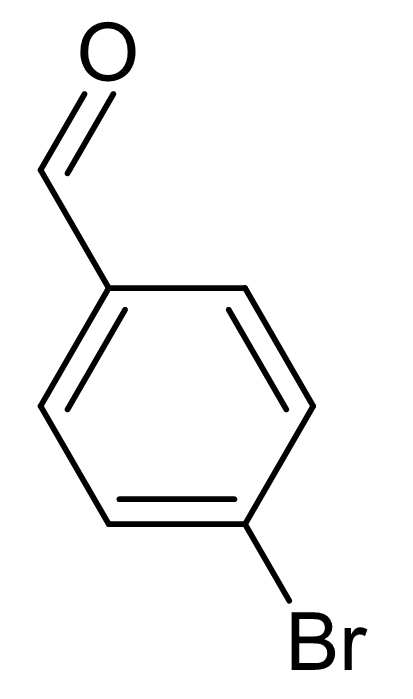
4-bromobenzaldehyd
Cena regularna:
Cena regularna:
towar niedostępny
dodaj do przechowalni
0

Opis
4-Bromobenzaldehyde
Other Names: p-Bromobenzaldehyde, 1-Bromo-4-formylbenzene, 4-Bromobenzenecarbaldehyde
CAS Number: 1122-91-4
Sum Formula: C₇H₅BrO
Molar Mass: 185.02 g/mol
Appearance: White to pale yellow crystalline solid
4-Bromobenzaldehyde is an aromatic aldehyde substituted with a bromine atom at the para position. It is commonly used as a building block in organic synthesis, especially in the production of fine chemicals, agrochemical intermediates, and functionalized aromatic compounds.
Chemical and Physical Properties
-
Density: 1.63 g/cm³ (at 20°C)
-
Melting Point: 56–59°C
-
Boiling Point: 230–232°C
-
Solubility in Water: Practically insoluble
-
Solubility in Other Solvents: Soluble in organic solvents like ethanol, ether, chloroform, acetone
-
Odor: Mild, aromatic
Applications
-
Organic Synthesis: Intermediate in the preparation of pharmaceuticals, dyes, and heterocyclic compounds
-
Material Chemistry: Used in the synthesis of functionalized polymers and aromatic ligands
-
Chemical Research: Employed in the development of brominated aromatic aldehydes and Grignard-type reactions
Safety

Signal Word: Warning
H302 (73.1%): Harmful if swallowed [Warning Acute toxicity, oral]
H315 (98.7%): Causes skin irritation [Warning Skin corrosion/irritation]
H319 (98.7%): Causes serious eye irritation [Warning Serious eye damage/eye irritation]
H334 (48.7%): May cause allergy or asthma symptoms or breathing difficulties if inhaled [Danger Sensitization, respiratory]
H335 (94.9%): May cause respiratory irritation [Warning Specific target organ toxicity, single exposure; Respiratory tract irritation]
P233, P260, P261, P264, P264+P265, P270, P271, P280, P284, P301+P317, P302+P352, P304+P340, P305+P351+P338, P319, P321, P330, P332+P317, P337+P317, P342+P316, P362+P364, P403, P403+P233, P405, and P501
First Aid Measures
-
Eye Contact: Rinse immediately with plenty of water. Seek medical attention if irritation persists
-
Skin Contact: Wash with soap and water. Remove contaminated clothing
-
Inhalation: Move to fresh air. Seek medical attention if respiratory symptoms occur
-
Ingestion: Rinse mouth. Do not induce vomiting. Seek medical assistance if unwell
Handling and Storage
-
Storage Conditions: Store in a cool, dry, well-ventilated place away from incompatible substances (e.g., oxidizers)
-
Handling Precautions: Avoid dust formation. Use personal protective equipment. Work in a fume hood or ventilated area