
 PRODUKTY
- ORGANICZNE(1115)
- Tiole(1)
- Związki metaloorganiczne(1)
- Alkohole(74)
- Aldehydy(43)
- Azotyny Alkilowe(6)
- Aminy(55)
- Aminokwasy(55)
- Amidy(33)
- Bezwodniki(11)
- Halogenki Kwasowe(5)
- Kwasy karboksylowe(167)
- Barwniki, wskaźniki(95)
- Estry(52)
- Etery(17)
- Halogenki(30)
- Flawonoidy(5)
- Heterocykle(25)
- Węglowodory(38)
- Imidy(1)
- Ketony(29)
- Rozpuszczalniki (premix)(16)
- Związki Nitrowe(7)
- Nitryle(9)
- Sole organiczne(73)
- Fenole(30)
- Polimery(64)
- Cukry(24)
- Związki krzemoorganiczne oraz fosforoorganiczne(1)
- Peptydy(2)
- Terpeny(16)
- Inne(126)
- NIEORGANICZNE(1022)
- SPRZĘT LABORATORYJNY(5155)
- *(1)
- Synteza organiczna(416)
- Przemysł(767)
Wersje językowe
Wersja US umożliwia dostawę do wszystkich dostępnych destynacji.


 Producenci
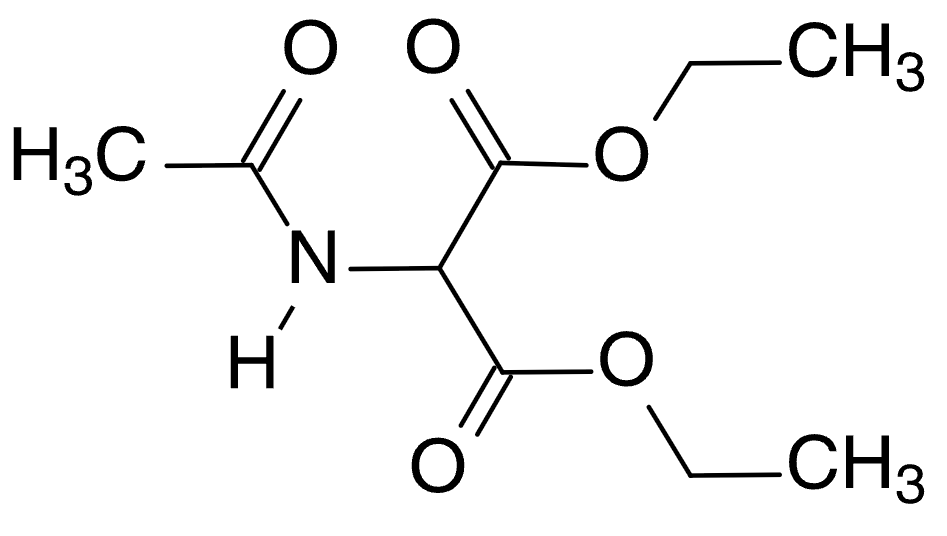
dietylowy acetamidomalonian
Cena regularna:
Cena regularna:
towar niedostępny
dodaj do przechowalni
0

Opis
Diethyl Acetamidomalonate
Other Names: DEAM, N-Acetylaminomalonic acid diethyl ester
CAS Number: 1068-90-2
Sum Formula: C₉H₁₅NO₅
Molar Mass: 217.22 g/mol
Appearance: Colorless to pale yellow liquid or low-melting solid
Diethyl Acetamidomalonate is an acetylated derivative of diethyl aminomalonate, widely used as a synthetic intermediate in organic chemistry. It serves as a building block in the preparation of heterocycles, amino acids, peptides, and various fine chemicals.
Chemical and Physical Properties
Density: ~1.18 g/cm³ (20°C)
Melting Point: 48–52°C (solid form)
Boiling Point: ~150–155°C at reduced pressure (decomposes)
Solubility in Water: Slightly soluble
Solubility in Organic Solvents: Miscible with ethanol, acetone, chloroform, and most organic solvents
Stability: Stable under recommended conditions; sensitive to moisture and heat
Applications
Intermediate in the synthesis of amino acids and peptides
Precursor for heterocyclic compound synthesis
Applied in fine chemical and pharmaceutical intermediate research
Useful in academic laboratories for multi-step organic synthesis
Safety

Signal Word: Warning
H302 (40%): Harmful if swallowed [Warning Acute toxicity, oral]
H315 (15%): Causes skin irritation [Warning Skin corrosion/irritation]
H319 (25%): Causes serious eye irritation [Warning Serious eye damage/eye irritation]
H335 (15%): May cause respiratory irritation [Warning Specific target organ toxicity, single exposure; Respiratory tract irritation]
First Aid Measures
Eye Contact: Rinse cautiously with water for several minutes. Seek medical attention if irritation persists
Skin Contact: Wash thoroughly with soap and water. Remove contaminated clothing
Inhalation: Move to fresh air. Seek medical attention if symptoms occur
Ingestion: Rinse mouth with water. Do not induce vomiting. Seek medical advice if unwell
Handling and Storage
Store in tightly sealed containers, in a cool, dry, and well-ventilated area
Protect from heat, light, and moisture
Avoid contact with strong oxidizing agents and bases