
 PRODUKTY
- ORGANICZNE(1030)
- Tiole(1)
- Związki metaloorganiczne(1)
- Kwasy sulfonowe(6)
- Alkohole(74)
- Aldehydy(37)
- Azotyny Alkilowe(6)
- Aminy(45)
- Aminokwasy(52)
- Amidy(29)
- Bezwodniki(12)
- Halogenki Kwasowe(5)
- Kwasy karboksylowe(157)
- Barwniki, wskaźniki(92)
- Estry(41)
- Etery(18)
- Halogenki(27)
- Flawonoidy(5)
- Heterocykle(21)
- Węglowodory(31)
- Imidy(2)
- Ketony(25)
- Rozpuszczalniki (premix)(13)
- Związki Nitrowe(7)
- Nitryle(9)
- Sole organiczne(73)
- Fenole(30)
- Polimery(56)
- Cukry(18)
- Związki krzemoorganiczne oraz fosforoorganiczne(1)
- Peptydy(2)
- Terpeny(12)
- Inne(124)
- NIEORGANICZNE(894)
- SPRZĘT LABORATORYJNY(5151)
- *(1)
- Synteza organiczna(354)
- Przemysł(708)
Wersje językowe
Wersja US umożliwia dostawę do wszystkich dostępnych destynacji.


 Producenci
Poliwinylopirolidon PVP K30
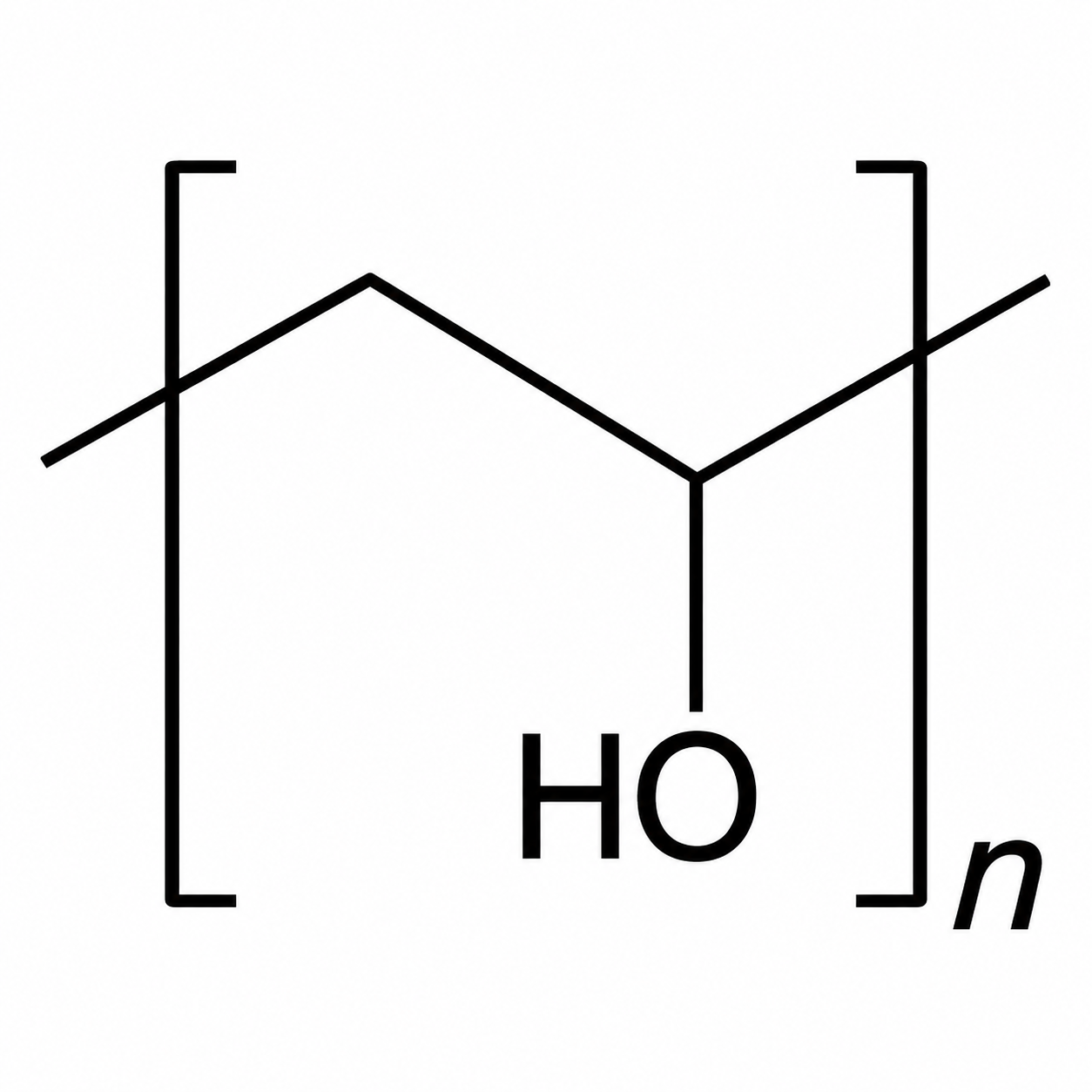
Cena regularna:
Cena regularna:
towar niedostępny
dodaj do przechowalni
0

Opis
Polyvinylpyrrolidone (PVP K30)
Other Names: Povidone K30, Poly(N-vinyl-2-pyrrolidone), Polyvinylpyrrolidone K30, PVP 30, Polyvidone, 1-Vinyl-2-pyrrolidinone homopolymer
Chemical Formula: (C6H9NO)n
Molar Mass: Approximately 40,000–55,000 g/mol (average molecular weight, depending on measurement method and product specification)
Repeating Unit Molar Mass: 111.14 g/mol
CAS Number: 9003-39-8
Appearance: White to off-white, fine powder
Odor: Odorless or almost odorless
SMILES (polymer repeating unit): *CC(*)N1CCCC1=O
Polyvinylpyrrolidone K30 (PVP K30) is a synthetic, nonionic, water-soluble polymer obtained through the polymerization of N-vinyl-2-pyrrolidone. Its molecular structure consists of a carbon–carbon polymer backbone bearing pendant five-membered pyrrolidone rings. The presence of polar lactam groups gives PVP K30 strong affinity for water and enables intermolecular interactions with numerous organic and inorganic compounds. These characteristics make it a versatile polymer in materials science, polymer chemistry, pharmaceutical technology and nanotechnology.
The designation K30 refers to the characteristic K-value, a viscosity-related parameter used to classify polyvinylpyrrolidone grades. PVP K30 typically exhibits a K-value of approximately 27–32.4, corresponding to an intermediate molecular weight compared with lower- and higher-viscosity PVP grades. Its molecular weight distribution and solution behavior have been investigated using techniques such as gel permeation chromatography, small-angle X-ray scattering and dynamic light scattering. Scientific studies demonstrate that the molecular weight and polymer-chain configuration influence solution viscosity, intermolecular association and processing characteristics.
PVP K30 is particularly valued for its film-forming, binding, dispersing and stabilizing properties. Its amphiphilic molecular character allows interactions with materials of different polarities, while the carbonyl groups of the pyrrolidone rings can participate in hydrogen bonding and coordination interactions. These properties contribute to its ability to stabilize amorphous systems, modify crystallization behavior and control particle formation. PVP K30 is also widely investigated as a functional polymer in the synthesis of nanoparticles, nanofibers and advanced composite materials.
Chemical and physical properties
PVP K30 is an amorphous polymer that occurs as a white to off-white, hygroscopic powder under ambient conditions. Unlike crystalline low-molecular-weight substances, it does not exhibit a sharply defined melting point. Instead, its thermal behavior is characterized by a glass transition, with a reported glass transition temperature of approximately 164 °C for dry PVP K30. The measured value may vary depending on moisture content, molecular weight distribution and experimental conditions.
PVP K30 is readily soluble in water and several polar organic solvents, including ethanol. Its good aqueous solubility results from the polar lactam groups, which interact strongly with water molecules. In aqueous solution, the polymer forms hydrated macromolecular chains, and its viscosity increases with polymer concentration. Its solubility and solution properties make it useful in the preparation of homogeneous polymer solutions, coatings and dispersions.
The characteristic K-value of PVP K30 typically ranges from 27 to 32.4. Published scientific data report a nominal weight-average molecular weight of approximately 40,000 g/mol, although experimental investigations have reported values around 50,000–57,500 g/mol for particular commercial samples. Such differences reflect molecular weight distributions and variations in analytical techniques and product specifications.
The polymer is hygroscopic and can absorb moisture from the surrounding atmosphere. Absorbed water influences its thermal and mechanical properties by acting as a plasticizer and reducing the glass transition temperature. Appropriate storage in tightly closed containers under dry conditions helps maintain consistent material characteristics.
The pyrrolidone carbonyl group is an important functional site responsible for interactions with other molecules. Infrared spectroscopic investigations of PVP K30 have identified characteristic carbonyl stretching bands near 1645–1665 cm−1. Changes in these bands can provide information about hydrogen bonding, molecular association and interactions between PVP and other components in polymer mixtures.
PVP K30 exhibits good film-forming properties and can produce uniform polymer matrices following solvent evaporation. The physical characteristics of these films depend on polymer concentration, solvent composition, humidity and the presence of other substances. Its amorphous structure and ability to form intermolecular interactions also make it suitable for modifying crystallization behavior in multicomponent solid systems.
Applications
Polymer chemistry and film formation: PVP K30 is used as a film-forming polymer, binder and formulation component in coatings, polymer blends and functional materials. Its ability to form homogeneous films makes it useful in the preparation of protective layers, experimental membranes and polymer-based composite structures. It can also improve cohesion and facilitate the processing of multicomponent formulations.
Nanotechnology and nanoparticle synthesis: PVP is extensively investigated as a stabilizing and capping agent in the synthesis of metallic and inorganic nanoparticles. Its molecular chains can interact with nanoparticle surfaces, helping control particle growth, reduce aggregation and improve colloidal stability. Depending on the reaction conditions, PVP may also influence nanoparticle morphology, surface chemistry and dispersion behavior. These characteristics are important in research involving nanostructured catalysts, optical materials and functional nanocomposites.
Pharmaceutical technology: PVP K30 is widely used as a polymeric binder, film former and stabilizing component in pharmaceutical formulations. Its hydrophilic character and ability to interact with other molecules make it useful in the preparation of amorphous solid dispersions and polymer-based delivery systems. Scientific investigations have demonstrated that PVP K30 can influence crystallization kinetics and contribute to the stabilization of amorphous molecular systems.
Cosmetic and personal care formulations: PVP K30 is employed as a film-forming agent, binder, emulsion stabilizer and viscosity-modifying component. It is particularly useful in formulations requiring flexible polymer films, adhesion and uniform distribution of ingredients. Its water solubility also facilitates incorporation into aqueous cosmetic systems.
Nanofiber and membrane fabrication: PVP K30 is used in research involving the production of ultrafine polymer fibers and porous materials. Studies have demonstrated its suitability for fiber formation through techniques such as electrospinning and pressurized gyration. Polymer concentration, molecular weight and processing conditions strongly influence fiber morphology, diameter and structural uniformity.
Dispersion stabilization and materials processing: PVP K30 is applied as a dispersing and stabilizing polymer in laboratory and industrial chemical formulations. Its affinity for various surfaces and ability to provide steric stabilization can improve the distribution of suspended particles and reduce aggregation. It is also investigated as a processing aid in the preparation of functional coatings, composite materials and inorganic nanostructures.
Scientific research: PVP K30 serves as a model water-soluble polymer in studies of macromolecular conformation, solution viscosity, polymer hydration, hydrogen bonding, crystallization and molecular interactions. Analytical techniques such as Fourier-transform infrared spectroscopy (FTIR), differential scanning calorimetry (DSC), X-ray diffraction (XRD), dynamic light scattering (DLS) and small-angle X-ray scattering (SAXS) are frequently employed to investigate its physicochemical behavior.
Scientific references
1. Koczkur, K. M., Mourdikoudis, S., Polavarapu, L., Skrabalak, S. E. (2015). "Polyvinylpyrrolidone (PVP) in nanoparticle synthesis." Dalton Transactions, 44, 17883–17905.
https://doi.org/10.1039/C5DT02964C
2. "Characterization of poly(N-vinyl-2-pyrrolidone)s with broad size distributions." (2010). Polymer, 51(8), 1723–1727.
https://doi.org/10.1016/j.polymer.2010.02.039
3. "Preparation of narrow-distribution polyvinylpyrrolidone by multi-stage high osmotic pressure chromatography." (1999). Polymer.
https://www.sciencedirect.com/science/article/pii/S0032386199000804
4. Nair, B. (1998). "Final Report On the Safety Assessment of Polyvinylpyrrolidone (PVP)." International Journal of Toxicology, 17(4_suppl).
https://doi.org/10.1177/109158189801700408
5. "Excipients in Pharmaceutical Additive Manufacturing: A Comprehensive Exploration of Polymeric Material Selection for Enhanced 3D Printing." (2024). Pharmaceutics, 16(3), 317.
https://doi.org/10.3390/pharmaceutics16030317
6. "Generation of poly(N-vinylpyrrolidone) nanofibres using pressurised gyration." (2014). Materials Science and Engineering: C.
https://www.sciencedirect.com/science/article/abs/pii/S0928493114000915
7. "The Impact of Various Poly(vinylpyrrolidone) Polymers on the Crystallization Process of Metronidazole." (2024). Scientific research article on polymer interactions and crystallization behavior.
https://pmc.ncbi.nlm.nih.gov/articles/PMC10820696/
8. Yu, D. G., Shen, X. X., Branford-White, C., White, K., Zhu, L. M., Bligh, S. W. A. (2009). "Oral fast-dissolving drug delivery membranes prepared from electrospun polyvinylpyrrolidone ultrafine fibers." Nanotechnology, 20, 055104.
https://doi.org/10.1088/0957-4484/20/5/055104