
 PRODUKTY
- ORGANICZNE(1115)
- NIEORGANICZNE(1022)
- Kwasy mineralne(48)
- Chelaty(2)
- Pierwiastki(120)
- Sole(544)
- Tlenki(120)
- Wodorotlenki(30)
- Wodorki(14)
- Inne(16)
- Nanocząstki(1)
- Roztwory mianowane(126)
- SPRZĘT LABORATORYJNY(5155)
- *(1)
- Synteza organiczna(416)
- Przemysł(767)
Wersje językowe
Wersja US umożliwia dostawę do wszystkich dostępnych destynacji.


 Producenci
Nadtlenek Wodoru 12%
Cena regularna:
Cena regularna:
towar niedostępny
dodaj do przechowalni
0


Opis
Hydrogen Peroxide 12%
Other Names: Hydrogen dioxide, Peroxide, Dioxidane, Perhydrol
Chemical Formula: H2O2
Molar Mass: 34.01 g/mol
CAS Number: 7722-84-1
Concentration: 12% aqueous solution
SMILES: OO
Appearance: Clear, colorless liquid
Odor: Slightly sharp characteristic odor
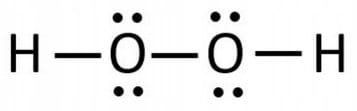
Hydrogen peroxide 12% is an aqueous solution of hydrogen peroxide, a simple peroxide containing an oxygen–oxygen single bond. Hydrogen peroxide is a strong oxidizing compound whose chemical reactivity is closely associated with the relatively weak peroxide bond. It can participate in direct oxidation reactions and can also generate highly reactive oxygen species under catalytic, photochemical or electrochemical conditions. In aqueous systems, hydrogen peroxide forms extensive hydrogen-bonding interactions with water, which influence the density, viscosity, diffusion and other physicochemical properties of its solutions. Hydrogen peroxide gradually decomposes into water and molecular oxygen, and this process can be strongly accelerated by heat, light, transition-metal ions and catalytic surfaces.
Chemical and physical properties
A 12% hydrogen peroxide solution is a homogeneous, clear and colorless aqueous liquid. Experimental investigations of aqueous hydrogen peroxide solutions show that their density increases with hydrogen peroxide concentration. At approximately 20 °C, a 12% by mass solution has a density of about 1.04 g/cm3.
Hydrogen peroxide is completely miscible with water. Its molecules are highly polar and participate in extensive intermolecular hydrogen bonding with surrounding water molecules. Molecular-simulation and experimental studies demonstrate that hydrogen bonding plays an important role in determining the structural and transport properties of aqueous hydrogen peroxide solutions.
Hydrogen peroxide is thermodynamically unstable and decomposes according to the reaction 2 H2O2 → 2 H2O + O2. The decomposition is exothermic and can be catalyzed by various metal ions and solid surfaces. For this reason, contamination of hydrogen peroxide solutions with incompatible materials can substantially increase the rate of oxygen evolution.
The compound is an effective oxidizing agent and can undergo both reduction and oxidation reactions depending on the reaction environment. Its activation by transition-metal catalysts, ultraviolet radiation, electrochemical processes or heterogeneous catalysts can produce reactive oxygen species such as hydroxyl radicals, which are important in advanced oxidation chemistry.
Applications
Hydrogen peroxide is widely used as an oxidizing reagent in laboratory and industrial chemistry. It participates in oxidation reactions involving organic and inorganic substrates and is extensively investigated as an alternative oxidant because water is one of its principal reduction products.
Aqueous hydrogen peroxide is used in water and wastewater treatment, particularly in advanced oxidation processes. In combination with catalysts, ultraviolet radiation or other activation methods, hydrogen peroxide can generate highly reactive radical species capable of transforming a broad range of organic contaminants.
Hydrogen peroxide is also used for surface disinfection and decontamination. Scientific studies have demonstrated broad antimicrobial activity associated primarily with oxidative damage to proteins, membrane components, nucleic acids and other cellular structures.
In materials science and synthetic chemistry, hydrogen peroxide is used in catalytic oxidation, surface treatment, preparation of functional materials and investigations of environmentally oriented oxidation technologies. It is also an important model compound in studies of reaction kinetics, radical chemistry, catalysis, electrochemistry and photocatalysis.
Scientific references
Huckaba, C. E.; Keyes, F. G. “The Density of Aqueous Hydrogen Peroxide Solutions.” Journal of the American Chemical Society, 1948, 70(7), 2578–2581. DOI: 10.1021/ja01187a084.
Fukuzumi, S. et al. “Recent progress in production and usage of hydrogen peroxide.” Chinese Journal of Catalysis, 2021, 42(8), 1241–1252. DOI: 10.1016/S1872-2067(20)63767-6.
McDonnell, G. “The Use of Hydrogen Peroxide for Disinfection and Sterilization Applications.” Peroxides, 2014. DOI: 10.1002/9780470682531.pat0885.
Falagas, M. E. et al. “Airborne hydrogen peroxide for disinfection of the hospital environment and infection control: a systematic review.” Journal of Hospital Infection, 2011, 78(3), 171–177. DOI: 10.1016/j.jhin.2010.12.006.
“Computing solubility and thermodynamic properties of H2O2 in water.” Journal of Molecular Liquids, 2024. Experimental and molecular-simulation analysis of density, viscosity, diffusion, hydrogen bonding and thermodynamic properties of aqueous hydrogen peroxide solutions.
SAFETY

Danger
Harmful if swallowed. Causes serious eye damage.
Wear protective gloves/protective clothing/eye protection/face protection. IF SWALLOWED: Immediately call a POISON CENTER/doctor. IF IN EYES: Rinse cautiously with water for several minutes. Remove contact lenses, if present and easy to do. Continue rinsing.
First Aid Measures
Description of first-aid measures
General Advice:
Ensure your own safety. If health issues arise or in case of doubt, inform a physician and provide this safety data sheet.
Inhalation:
Remove person to fresh air. Seek medical attention if symptoms persist.
Skin Contact:
Remove contaminated clothing. Rinse skin with plenty of water. Seek medical attention if irritation develops.
Eye Contact:
Immediately flush eyes with water for at least 15 minutes, keeping eyelids open. Remove contact lenses if present and easy to do. Seek immediate medical attention.
Ingestion:
Rinse mouth with water. Do not induce vomiting. Seek medical attention if discomfort occurs.