
 PRODUKTY
- ORGANICZNE(1220)
- NIEORGANICZNE(1075)
- Kwasy mineralne(49)
- Chelaty(2)
- Pierwiastki(130)
- Sole(577)
- Tlenki(123)
- Wodorotlenki(36)
- Wodorki(14)
- Inne(16)
- Nanocząstki(1)
- Roztwory mianowane(126)
- SPRZĘT LABORATORYJNY(5155)
- *(1)
- Synteza organiczna(445)
- Przemysł(784)
Wersje językowe
Wersja US umożliwia dostawę do wszystkich dostępnych destynacji.


 Producenci
Kwas fosforowy (V) (Ortofosforowy) 85%
Cena regularna:
Cena regularna:
towar niedostępny
dodaj do przechowalni
0

 (Ortofosforowy) 85% "Pin It")
Opis
Phosphoric (V) Acid (Orthophosphoric Acid) 85%
Other Names: Orthophosphoric Acid, Phosphoric Acid, Phosphoric(V) Acid, o-Phosphoric Acid
Chemical Formula: H3PO4
Concentration: 85 wt.% H3PO4 in water
Molar Mass: 98.00 g/mol (pure H3PO4)
CAS Number: 7664-38-2
SMILES: OP(=O)(O)O
Appearance: Clear, colorless, viscous liquid
Density: Approximately 1.685 g/cm3 at 25 °C
Approximate Concentration: 14.6 mol/L H3PO4
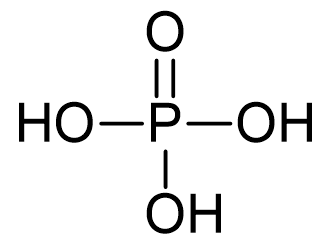
Phosphoric(V) acid, commonly known as orthophosphoric acid, is an inorganic phosphorus oxyacid in which phosphorus is present in the +5 oxidation state. The molecule contains a central phosphorus atom bonded to four oxygen atoms and is conventionally represented as OP(OH)3. An 85 wt.% aqueous solution is a concentrated, strongly acidic and highly viscous liquid widely employed as a chemical reagent, surface-treatment agent and precursor to inorganic phosphate materials. NIST reference data report a molecular mass of 97.9952 g/mol and CAS Registry Number 7664-38-2 for H3PO4.
Chemical and physical properties
An 85 wt.% aqueous solution of phosphoric acid has a density of approximately 1.685–1.686 g/cm3 at 25 °C. At this concentration, 100 g of solution contains approximately 85 g of H3PO4 and 15 g of water, corresponding to an approximate molar concentration of 14.6 mol/L. The concentrated solution is considerably more viscous than water because of extensive hydrogen bonding and strong interactions between phosphoric acid molecules, phosphate species and water.
Phosphoric acid is a triprotic acid capable of releasing three protons in successive equilibria. Representative aqueous dissociation constants are approximately pKa1 = 2.15, pKa2 = 7.20 and pKa3 = 12.35. Consequently, the dominant phosphorus-containing species changes strongly with pH: H3PO4 predominates under strongly acidic conditions, H2PO4− at moderately acidic to near-neutral pH, HPO42− under moderately alkaline conditions and PO43− at high pH.
Unlike strong mineral acids such as hydrochloric or nitric acid, phosphoric acid is non-volatile under ordinary conditions. Concentrated aqueous phosphoric acid has a high boiling temperature; reference data for commercial 85 wt.% material commonly give approximately 158 °C. Heating concentrated phosphoric acid to higher temperatures progressively removes water and can promote condensation to pyrophosphoric acid and higher polyphosphoric acids.
Applications
Phosphoric acid is widely used in metal-surface treatment and phosphating processes. Reaction with metallic surfaces and appropriate metal ions can generate adherent phosphate-containing conversion layers. Such treatments are investigated and applied to improve corrosion resistance, modify surface chemistry and provide a suitable substrate for subsequent coatings, paints and polymer layers.
In laboratory and synthetic chemistry, 85% phosphoric acid is used as an acidic reaction medium, proton source and dehydration-promoting reagent. Its relatively low volatility makes it useful in reactions requiring strongly acidic conditions at elevated temperatures without the rapid evaporation characteristic of more volatile acids. It is also employed for pH adjustment and for preparation of phosphate buffer systems after controlled neutralization.
Phosphoric acid is used in the synthesis of inorganic phosphates and phosphate-containing functional materials. Reaction with metal oxides, hydroxides, carbonates or salts provides access to metal phosphates with applications in catalysis, ceramics, surface chemistry and electrochemical materials. The speciation and structure of the resulting phosphate phases depend strongly on pH, stoichiometry, temperature and the metal ion involved.
Concentrated phosphoric acid is extensively investigated in proton-conducting materials. Polymer membranes doped with H3PO4 can exhibit substantial proton conductivity because phosphoric acid forms extended hydrogen-bonding networks capable of supporting proton transport. Such acid-doped polymer systems are studied for high-temperature proton-exchange membrane fuel cells and related electrochemical devices. Scientific studies commonly use 85 wt.% phosphoric acid during membrane doping procedures.
Phosphoric acid is also used as a chemical activating agent in the preparation of activated carbon and porous carbonaceous materials. During thermal treatment it can promote dehydration, alter carbonization pathways and contribute to development of porous structures. The resulting surface area, pore distribution and surface functionality depend on precursor composition, acid-to-precursor ratio and activation temperature.
Handling and safety
Phosphoric acid 85% is strongly corrosive and can cause severe damage to the skin and eyes. Contact with concentrated material should therefore be prevented by the use of suitable chemically resistant gloves, protective clothing and eye or face protection. Operations where aerosols or splashes may be generated should be performed with appropriate ventilation.
Dilution of concentrated phosphoric acid with water is exothermic. Water should therefore not be rapidly introduced into a large quantity of concentrated acid. Controlled laboratory dilution is performed by slowly adding the acid to an appropriate quantity of water with stirring and, where necessary, external cooling.
Phosphoric acid reacts with bases to form dihydrogen phosphates, hydrogen phosphates or orthophosphates depending on the degree of neutralization. It can also react with reactive metals and metal oxides. Storage containers and process equipment should therefore be selected for compatibility with concentrated acidic solutions.
Scientific references
NIST Chemistry WebBook, SRD 69. Phosphoric Acid. CAS Registry Number 7664-38-2. National Institute of Standards and Technology.
Chase, M. W., Jr. NIST-JANAF Thermochemical Tables, Fourth Edition. Journal of Physical and Chemical Reference Data, Monograph 9, 1998, 1–1951.
Morris, R. A.; Knighton, W. B.; Viggiano, A. A.; Hoffman, B. C.; Schaefer, H. F. The Gas-Phase Acidity of H3PO4. Journal of Chemical Physics, 1997, 106, 3545. DOI: 10.1063/1.473465.
Upadhyay, D. et al. Carbonate clumped isotope analysis of carbonate standards determined via gas-source isotope-ratio mass spectrometry. Rapid Communications in Mass Spectrometry, 2021, 35, e9143. DOI: 10.1002/rcm.9143.
Reference physicochemical data for aqueous orthophosphoric acid report a density of approximately 1.686 g/cm3 at 25 °C for the 85 wt.% solution and describe the concentration-dependent formation of condensed phosphoric acids at higher nominal acid concentrations.
Safety Information

Signal Word: ⚠️ Warning
GHS Hazard Statements
H290 (18%): May be corrosive to metals [Warning Corrosive to Metals]
H302 (15.1%): Harmful if swallowed [Warning Acute toxicity, oral]
H314 (99.9%): Causes severe skin burns and eye damage [Danger Skin corrosion/irritation]
H318 (18.2%): Causes serious eye damage [Danger Serious eye damage/eye irritation]
P234, P260, P264, P264+P265, P270, P280, P301+P317, P301+P330+P331, P302+P361+P354, P304+P340, P305+P354+P338, P316, P317, P321, P330, P363, P390, P405, P406, and P501
Handling and Storage
-
Handling:
-
Use in a well-ventilated area or under appropriate fume extraction.
-
Avoid any contact with skin, eyes, and clothing.
-
Handle using proper personal protective equipment (PPE).
-
-
Storage:
-
Store in tightly sealed, corrosion-resistant containers in a cool, dry, and well-ventilated area.
-
Keep away from incompatible substances such as strong bases and reactive metals.
-
Protect from moisture and maintain a secure environment to prevent leaks.
-