
 PRODUKTY
- ORGANICZNE(1030)
- NIEORGANICZNE(894)
- Kwasy mineralne(40)
- Chelaty(2)
- Pierwiastki(115)
- Sole(509)
- Tlenki(119)
- Wodorotlenki(26)
- Wodorki(14)
- Inne(20)
- Nanocząstki(1)
- Roztwory mianowane(47)
- SPRZĘT LABORATORYJNY(5151)
- *(1)
- Synteza organiczna(354)
- Przemysł(708)
Wersje językowe
Wersja US umożliwia dostawę do wszystkich dostępnych destynacji.


 Producenci
Chlorek Sodu cz.d.a.
Cena regularna:
Cena regularna:
towar niedostępny
dodaj do przechowalni
0


Opis
Sodium Chloride p.a. grade
Other Names: Sodium Chloride for Analysis, Sodium Chloride Analytical Reagent, Sodium Chloride pro Analysi, Sodium Chloride AR Grade, Sodium Monochloride, Halite
Chemical Formula: NaCl
Molar Mass: 58.44 g/mol
CAS Number: 7647-14-5
EC Number: 231-598-3
Appearance: White or colorless crystalline solid, powder or granules
Odor: Odorless
Grade: p.a. (pro analysi), analytical reagent grade
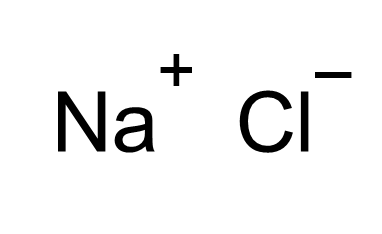
SMILES: [Na+].[Cl-]
Sodium chloride p.a. grade is a high-purity inorganic chemical reagent consisting of sodium and chloride ions in a 1:1 molar ratio. The designation p.a. (pro analysi) indicates that the material is intended for analytical laboratory procedures requiring controlled chemical purity and low levels of interfering impurities. Unlike technical-grade sodium chloride, analytical-grade material is manufactured and tested to meet defined quality specifications suitable for quantitative chemical analysis, preparation of standard solutions and physicochemical investigations. The exact purity and permitted impurity concentrations depend on the manufacturer's specifications and should be verified using the corresponding certificate of analysis. Sodium chloride is an ionic compound characterized by a highly ordered cubic crystal structure in which each sodium ion is surrounded by six chloride ions and each chloride ion is surrounded by six sodium ions. This arrangement, commonly known as the rock-salt structure, contributes to its high melting point and characteristic crystalline properties. When dissolved in water, sodium chloride dissociates into hydrated Na+ and Cl− ions, producing an electrically conductive electrolyte solution. Its well-characterized chemical behavior, high water solubility and reproducible ionic composition make sodium chloride p.a. grade an important reagent in analytical chemistry, electrochemistry, solution thermodynamics and laboratory research.
Chemical and physical properties
Sodium chloride is a white or colorless crystalline solid under ambient conditions. Published reference data report a melting point of approximately 801 °C and a boiling point of approximately 1465 °C at atmospheric pressure. Its relatively high melting temperature results from strong electrostatic interactions between oppositely charged ions within the crystalline lattice.
The density of crystalline sodium chloride is approximately 2.16–2.17 g/cm3 near room temperature. Its crystal structure belongs to the cubic system, with space group Fm-3m. The lattice consists of two interpenetrating face-centered cubic sublattices, producing octahedral coordination around both ionic species. This highly symmetrical arrangement is frequently used as a reference model in crystallography and solid-state physics.
Sodium chloride is highly soluble in water. Published solubility data indicate that approximately 36.0 g of NaCl can dissolve in 100 g of water at 25 °C. Its solubility changes relatively little with increasing temperature compared with many other inorganic salts. Experimental investigations of sodium chloride in mixed aqueous-organic solvents have demonstrated that solubility depends strongly on solvent composition, polarity and temperature.
In aqueous solution, sodium chloride behaves as a strong electrolyte and dissociates into sodium and chloride ions. These ions interact with surrounding water molecules through ion-dipole forces, forming hydration structures that influence ionic mobility, diffusion and conductivity. Molecular dynamics investigations have demonstrated that the organization and dynamics of hydration shells vary with electrolyte concentration.
The electrical conductivity of aqueous sodium chloride solutions depends on concentration, temperature and ionic interactions. Experimental measurements have established conductivity relationships over a wide range of temperatures and concentrations. At low concentrations, molar conductivity approaches its limiting value as ion-ion interactions decrease. At higher concentrations, ionic atmosphere effects, hydration and changes in solution viscosity influence ion transport.
Sodium chloride is chemically stable under normal laboratory storage conditions and is nonflammable. It is only slightly soluble in ethanol and many other organic solvents. In aqueous systems, its chloride ions can undergo characteristic precipitation reactions with silver ions, forming sparingly soluble silver chloride. This reaction is particularly important in argentometric analytical methods.
Analytical-grade sodium chloride is intended for procedures in which impurities may influence measurement accuracy or reproducibility. Depending on the manufacturer's specification, quality-control parameters may include the assay of NaCl, concentrations of calcium, magnesium, potassium and heavy metals, sulfate content, bromide content and insoluble matter. The p.a. designation does not establish a universal numerical purity threshold; the actual specifications are product-dependent.
Applications
Sodium chloride p.a. grade is extensively used in analytical chemistry for the preparation of accurately defined chloride solutions and laboratory reference reagents. High-purity sodium chloride can serve as a starting material for preparing standard solutions used in quantitative determinations of chloride ions. These solutions are particularly important in precipitation titrations involving silver nitrate, including the Mohr method and potentiometric argentometric procedures. When properly characterized and prepared, sodium chloride standards can also be used to verify the concentration of silver nitrate titrants and evaluate analytical method performance.
In electrochemistry, sodium chloride is used as a supporting electrolyte and as a model compound for investigating electrical conductivity, ionic mobility, diffusion and electrochemical transport phenomena. Aqueous NaCl solutions are frequently employed in experimental investigations of electrode behavior, ion transport across membranes and the influence of electrolyte concentration on electrochemical systems.
Sodium chloride is also used in physicochemical research to prepare electrolyte solutions of controlled ionic strength. Such solutions are valuable for studying activity coefficients, osmotic properties, ion-ion interactions and thermodynamic behavior. Published investigations have established detailed relationships between sodium chloride concentration, temperature and electrolyte activity, making NaCl an important reference system for testing theoretical models of aqueous ionic solutions.
In laboratory investigations of separation processes, sodium chloride solutions are used to study ion transport, membrane selectivity, diffusion and osmotic phenomena. They are employed in experiments involving reverse osmosis, electrodialysis, ion exchange and related membrane-based technologies. The predictable ionic composition of sodium chloride allows researchers to investigate the influence of salt concentration on separation efficiency and transport behavior.
Sodium chloride p.a. grade is used in chemical and materials research for the preparation of controlled reaction media and electrolyte solutions. It is also employed in studies of crystallization, nucleation, crystal growth and solid-liquid equilibria. Its cubic crystal structure makes it a representative model compound in investigations of ionic solids, lattice energy, surface properties and crystal morphology.
In analytical method development, high-purity sodium chloride is used for preparing calibration solutions, control samples and reference matrices for instrumental and classical chemical analysis. It is relevant to techniques such as ion chromatography, conductivity measurements, potentiometry and chloride-selective electrode analysis. The use of characterized reagent-grade material helps reduce uncertainty associated with reagent impurities and improves the reproducibility of quantitative experiments.
Sodium chloride solutions are additionally investigated in corrosion science, where chloride ions influence the electrochemical behavior of metallic surfaces. Controlled NaCl electrolytes are commonly used to examine corrosion mechanisms, protective coatings, passive film stability and the resistance of engineering materials to chloride-containing environments.
Scientific references
- Pinho, S. P., Macedo, E. A. "Solubility of NaCl, NaBr, and KCl in Water, Methanol, Ethanol, and Their Mixed Solvents." Journal of Chemical & Engineering Data, 50(1), 29–32 (2005). https://doi.org/10.1021/je049922y
- Isono, T. "Density, viscosity, and electrolytic conductivity of concentrated aqueous electrolyte solutions at several temperatures. Alkaline-earth chlorides, lanthanum chloride, sodium chloride, sodium nitrate, sodium bromide, potassium nitrate, potassium bromide, and cadmium nitrate." Journal of Chemical & Engineering Data, 29(1), 45–52 (1984). https://doi.org/10.1021/je00035a016
- Zimmerman, G. H., Arcis, H., Tremaine, P. R. "Limiting Conductivities and Ion Association Constants of Aqueous NaCl under Hydrothermal Conditions: Experimental Data and Correlations." Journal of Chemical & Engineering Data, 57(9), 2415–2429 (2012). https://doi.org/10.1021/je300361j
- "Traceable Values for Activity and Osmotic Coefficients in Aqueous Sodium Chloride Solutions at Temperatures from 273.15 to 373.15 K up to the Saturated Solutions." Journal of Chemical & Engineering Data (2020). https://doi.org/10.1021/acs.jced.0c00402
- Lee, S. H. "Dynamic and Static Properties of Aqueous NaCl Solutions at 25°C as a Function of NaCl Concentration: A Molecular Dynamics Simulation Study." Journal of Chemistry, 2020, Article ID 6661196 (2020). https://doi.org/10.1155/2020/6661196
- Ramires, M. L. V., Nieto de Castro, C. A., Fareleira, J. M. N. A., Wakeham, W. A. "Thermal conductivity of aqueous sodium chloride solutions." Journal of Chemical & Engineering Data, 39(1), 186–190 (1994). https://doi.org/10.1021/je00013a053