
 CATEGORIES
- ORGANIC COMPOUNDS(1134)
- Thiols(1)
- Metal-organic compounds(1)
- Sulfonic acids(6)
- Alcohols(74)
- Aldehydes(47)
- Alkyl nitrites(6)
- Amines(56)
- Aminoacids(59)
- Amides(33)
- Anhydrides(11)
- Acyl Halides(5)
- Carboxylic Acids(170)
- Dyes and Indicators(99)
- Esters(52)
- Ethers(17)
- Organic Halogens (Organohalides)(30)
- Flavonoids(5)
- Heterocycles(25)
- Hydrocarbons(38)
- Imides(2)
- Ketones(29)
- Mixed solvents(16)
- Nitro Compounds(5)
- Nitriles(9)
- Organic salts(74)
- Phenols(30)
- Polymers ( HMW compounds )(68)
- Sugars (Saccharides)(24)
- Silicoorgano and Phosphoorganocompounds(1)
- Peptides(2)
- Terpenes(16)
- Others(125)
- INORGANIC COMPOUNDS(1055)
- LAB EQUIPMENT(5176)
- *(1)
- Organic Synthesis(421)
- Industry(775)
Language
US version allows shipping to all available destinations


 MANUFACTURER
Polymers are high–molecular-weight materials composed of repeating structural units (monomers) linked by covalent bonds. Their macroscopic properties—such as strength, elasticity, and thermal behavior—arise from chain architecture and intermolecular interactions.
Carboxymethylcellulose Powder cmc Methylcellulose - 10 000g = 10kg bag

Availability: Large quantity
Dispatched within: 7 days
Carboxymethylcellulose Powder cmc Methylcellulose - 1000g

Availability: Large quantity
Dispatched within: 7 days
Carboxymethylcellulose Powder cmc Methylcellulose - 100g

Availability: Large quantity
Dispatched within: 7 days
Carboxymethylcellulose Powder cmc Methylcellulose - 20 000g = 20kg bag

Availability: Large quantity
Dispatched within: 7 days
Carboxymethylcellulose Powder cmc Methylcellulose - 5000g

Availability: Large quantity
Dispatched within: 7 days
Carboxymethylcellulose Powder cmc Methylcellulose - 500g

Availability: Large quantity
Dispatched within: 7 days


Dextrin Yellow Dextrin Powder - 25 000g = 25kg

Availability: Large quantity
Dispatched within: 7 days




Microcellulose ( MCC ) Microcrystalline Cellulose - 1000g

Availability: Large quantity
Dispatched within: 7 days
Microcellulose ( MCC ) Microcrystalline Cellulose - 100g

Availability: Large quantity
Dispatched within: 7 days
Microcellulose ( MCC ) Microcrystalline Cellulose - 25 000g = 25kg

Availability: Large quantity
Dispatched within: 7 days
Microcellulose ( MCC ) Microcrystalline Cellulose - 5000g

Availability: Large quantity
Dispatched within: 7 days
Microcellulose ( MCC ) Microcrystalline Cellulose - 500g

Availability: Large quantity
Dispatched within: 7 days

Paraformaldehyde ( Polyoxymethylene ) PFA - 1000g

Availability: Large quantity
Dispatched within: 7 days
Paraformaldehyde ( Polyoxymethylene ) PFA - 100g

Availability: Large quantity
Dispatched within: 7 days
Paraformaldehyde ( Polyoxymethylene ) PFA - 25 000g = 25kg

Availability: Large quantity
Dispatched within: 7 days
Paraformaldehyde ( Polyoxymethylene ) PFA - 5000g

Availability: Large quantity
Dispatched within: 7 days
Paraformaldehyde ( Polyoxymethylene ) PFA - 500g

Availability: Large quantity
Dispatched within: 7 days
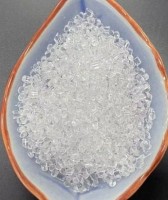
A polymer is characterized by its degree of polymerization (DP) and molar-mass distribution, typically reported as number-average (Mₙ) and weight-average (M_w) molecular weights; the ratio M_w/Mₙ defines the polydispersity index (Đ). Because polymerization is stochastic, real polymers are ensembles of chains of varying length rather than single, uniform molecules, and this distribution strongly influences mechanical and processing behavior.
Classification and architecture.
Polymers may be homopolymers (one monomer) or copolymers (≥2 monomers), with copolymer sequence types such as random, alternating, block, or graft. Chain topology can be linear, branched, crosslinked/network, or dendritic, and architecture controls crystallinity, viscosity, and toughness. They are also grouped by backbone chemistry (carbon-chain vs heteroatom-containing), and by origin (natural like cellulose/proteins; synthetic like polyethylene).
Polymerization mechanisms.
Two broad mechanistic families dominate:
-
Chain-growth polymerization (addition): monomers add to an active center (radical, cationic, anionic, or coordination/metal-catalyzed), giving rapid molar-mass buildup early in the reaction. Examples include free-radical polymerization of styrene and Ziegler–Natta/Metallocene polymerization of alkenes.
-
Step-growth polymerization (condensation/addition): any two reactive species can combine, so high molar mass appears only near full conversion. Examples include polyesters, polyamides, and polyurethanes. Carothers’ equation relates DP to conversion in ideal step-growth systems.
Structure–property relationships.
Polymer properties depend on chain flexibility, side-group sterics, and interchain forces (van der Waals, H-bonding, ionic interactions). Semicrystalline polymers contain ordered lamellae embedded in amorphous regions; increased crystallinity typically raises modulus and melting temperature (T_m) but reduces transparency and impact resistance. Amorphous polymers exhibit a glass transition temperature (T_g), above which segmental motion yields rubbery behavior. Crosslinking restricts mobility, increasing T_g and solvent resistance and producing elastomers or thermosets.
Rheology and processing.
In melts and solutions, long chains entangle, giving rise to non-Newtonian viscosity and viscoelasticity. Processing methods (extrusion, injection molding, spinning) exploit temperature-dependent viscosity and relaxation times; additives (plasticizers, fillers, stabilizers) further tailor performance.
Applications and significance.
Polymers underpin modern materials—from packaging (PE, PP), fibers (nylon, PET), and engineering thermoplastics (PC, PEEK) to elastomers (SBR, silicone) and high-performance composites. In biology, polymers such as DNA, polysaccharides, and proteins are information-bearing and functional macromolecules, illustrating how sequence and higher-order structure encode complex behavior.